


Can Calamine Lotion Be Applied to Infantile Eczema?
Jan 08, 2022
Source: Cainiu Health

Dr. Zhou Xiaofeng
Introduction
Calamine lotion can be applied to treat infantile eczema. When infantile eczema occurs, the affected area of the infant’s skin typically becomes abnormally itchy and may also exhibit flaky desquamation and erythematous papules. Topical application of calamine lotion can rapidly alleviate the infant’s pruritus and provide some improvement to the affected skin.
Calamine lotion is safe for topical application on infants; however, only a small amount should be applied at a time to avoid irritating the baby’s delicate skin. Infants’ skin is particularly fragile, so application should be limited to approximately twice daily. In addition to topical calamine, oral medications for eczema treatment should also be administered to achieve optimal therapeutic outcomes—combining internal and external therapies enhances treatment efficacy. Below, we address the question: “Can calamine lotion be used for infantile eczema?”
Can Calamine Lotion Be Used for Infantile Eczema?
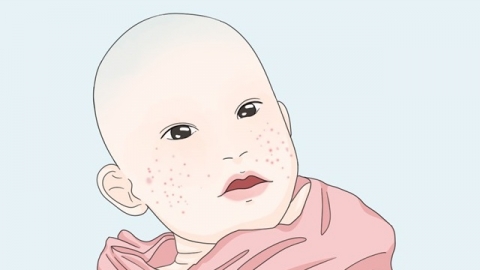
Yes, calamine lotion may be safely applied to infants with eczema. When infantile eczema occurs, affected areas typically exhibit intense pruritus (itching), often accompanied by flaky desquamation and erythematous papules. Topical calamine provides rapid relief from itching and helps improve local skin condition. Infantile eczema is closely associated with the infant’s constitutional factors and breastfeeding practices, among other causes. Pruritus is the most common clinical symptom, and topical calamine effectively alleviates it. However, for severe cases, calamine alone is insufficient; combination therapy with other medications is necessary.
Additional Information: Topical Medications for Infantile Eczema
1. Calamine is a carbonate mineral derived from the calcite group—specifically, smithsonite—and its primary active ingredient is zinc carbonate. It possesses astringent, antipruritic, and wound-healing properties and is widely used in dermatology to treat non-healing ulcers, profuse purulent exudation, and pruritic eczema. Externally, calamine partially absorbs wound exudate, providing astringent and protective effects on skin lesions while inhibiting local Staphylococcus growth. For eczema, calamine may be combined appropriately with zinc oxide and glycerin—but care must be taken to avoid mucosal surfaces such as the mouth and nose. If no improvement is observed after several days of calamine use, prompt medical consultation is advised.
2. Calamine lotion is a commonly prescribed topical agent in clinical practice. It is effective for eczema presenting predominantly with erythema or papules. However, it is contraindicated for eczema characterized primarily by erosion or exudation. Clinically, eczema manifests with polymorphic features—including erythema, papules, exudation, erosion, crusting, xerosis, lichenification, and fissuring—as well as intense pruritus. According to dermatological principles for topical therapy: - For eczema dominated by erythema or papules, ointments or lotions (e.g., calamine lotion) are appropriate choices; calamine lotion offers excellent antipruritic and anti-allergic effects and is thus suitable for such cases. - For eczema with predominant exudation, wet compresses with aqueous solutions are recommended. - For eroded or crusted lesions, oil-based preparations are preferred. Calamine lotion is contraindicated in these latter two scenarios.
The above outlines whether calamine lotion can be used for infantile eczema. We hope this information proves helpful.



