What Causes Vertical Ridges on the Nails?
Apr 13, 2022
Source: Cainiu Health

Dr. Gan Liqiang
Introduction
Some individuals have vertical ridges on their fingernails, which may result from numerous clinical factors. The most common cause is longitudinal ridging (also known as nail ridges), though the precise etiology remains unclear. This condition is a frequent clinical manifestation of nail dystrophy and, in most cases, poses no significant threat to overall health. However, it may also indicate a deficiency in trace elements.
Nails are common anatomical structures in daily life and represent one of the skin appendages. They serve to protect the distal pulp of the fingers from injury and also contribute to tactile stability.
What Causes Vertical Ridges on Nails?
Vertical ridges on fingernails may arise from numerous clinical factors. The most common cause is longitudinal ridging (also termed “longitudinal grooves” or “nail ridges”), though the precise etiology remains incompletely understood. This condition is frequently associated with nail dystrophy—a benign, non-pathological change that typically poses no significant threat to overall health.
However, vertical ridges may also reflect deficiencies in trace elements—particularly iron, zinc, or calcium—which can manifest as nail abnormalities including longitudinal ridging or longitudinal splitting (a type of vertical fissure). Additionally, mechanical trauma—such as repeated pressure or crushing injuries—may contribute to this appearance.
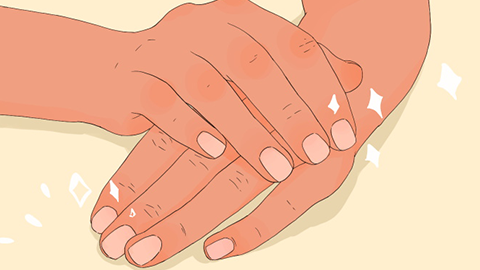
If vertical lines are the sole abnormality observed on the nails, nail dystrophy is the most likely explanation—and generally requires no specific treatment. Nevertheless, it is advisable to assess for underlying systemic conditions, such as gastrointestinal disorders or malabsorption syndromes, which may affect nutritional status.
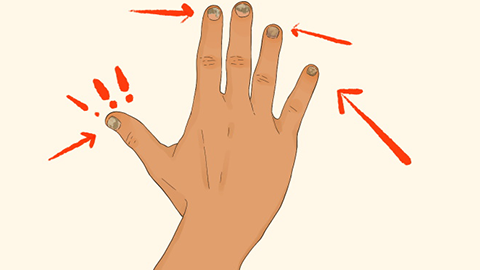
Secondly, chronic local inflammation—including certain dermatologic conditions affecting the nail unit—can also induce vertical ridging. Examples include lichen planus of the nail and psoriatic nail involvement, both of which commonly present with concomitant changes in nail texture and structure. We hope this information proves helpful.