


What Are the Early Symptoms of Paget’s Disease of the Breast?
Apr 24, 2022
Source: Cainiu Health

Dr. Lv Aiming
Introduction
Early symptoms of Paget’s disease of the breast include nipple discharge, pruritus (itching), stinging, and a burning sensation. In its early stage, Paget’s disease causes minimal visible changes to the nipple skin, making it easily overlooked. However, some patients develop localized erythema and edema, with the lesion progressively enlarging. The affected area may appear bright red, accompanied by patchy desquamation, mild erosion, and exudation.
Paget’s disease of the nipple (also known as eczematoid carcinoma of the nipple) is relatively uncommon in daily life, and most people are unfamiliar with its symptoms and clinical manifestations. What are the early signs of Paget’s disease of the nipple?
What Are the Early Symptoms of Paget’s Disease of the Nipple?
Early symptoms of Paget’s disease of the nipple include nipple discharge, pruritus (itching), stabbing or burning sensations. In the early stage, skin changes around the nipple are often subtle and thus easily overlooked. However, some patients may present with localized erythema and edema, with the lesion gradually expanding in size. The affected area may appear bright red, accompanied by patchy desquamation, mild erosion, and serosanguineous exudation. Subsequently, grayish-yellow or light green crusts may form; beneath these crusts lies a granular, friable granulation tissue surface, with occasional small amounts of blood-tinged exudate or fissuring of the nipple.

Paget’s disease of the nipple is an in situ carcinoma with minimal stromal invasion. The primary lesion typically involves the nipple and surrounding areola and represents an early-stage malignant tumor. This malignancy is generally unrelated to underlying deep breast cancers. As an in situ carcinoma—also termed Paget’s disease—it exhibits low-grade malignancy, progresses slowly, and rarely metastasizes distantly; consequently, overall treatment outcomes and prognosis are favorable.
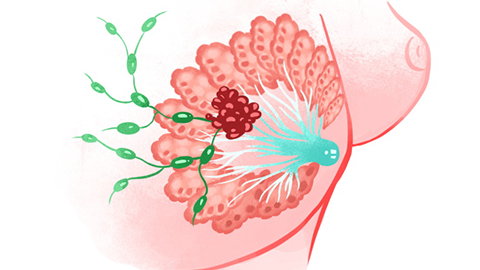
During treatment, proper local skin care is essential. Patients should maintain a light, balanced diet rich in vitamins and high-quality protein to support recovery. We hope this information proves helpful!






