


How many hairs falling out daily is considered normal?
May 30, 2022
Source: Cainiu Health

Dr. Liu Wan
Introduction
It is normal for healthy individuals to shed 70–100 hairs per day. The average person has approximately 100,000 hairs on their scalp. Hair growth occurs in three distinct phases: the anagen (growth) phase, catagen (transition) phase, and telogen (resting/shedding) phase. On any given day, about 85% of hairs are in the anagen phase. Consequently, the number of hairs shed daily is typically balanced by an equivalent number of new hairs emerging from the scalp. Hair grows at an average rate of approximately 0.3–0.4 mm per day.
Every year as summer transitions into autumn, many people experience a wave of melancholy. Upon waking each day and gazing into the mirror, they notice their hair appears thinner—and feel emotionally exhausted. Ancient Chinese poets often lamented the passing of spring and mourned the arrival of autumn. So, how many hairs falling out daily is considered normal?
How Many Hairs Falling Out Daily Is Normal?
In healthy individuals, shedding 70–100 hairs per day is considered normal. The average person has approximately 100,000 hairs on their scalp. Hair growth follows three distinct phases: anagen (growth phase), catagen (transitional or regression phase), and telogen (resting phase). Roughly 85% of scalp hairs are in the anagen phase at any given time. Thus, for every hair shed, a new one typically emerges from the follicle to replace it. Under normal conditions, hair grows at an average rate of about 0.3–0.4 mm per day. If daily hair loss significantly exceeds this range, medical evaluation is recommended—excessive shedding may indicate pathological alopecia.
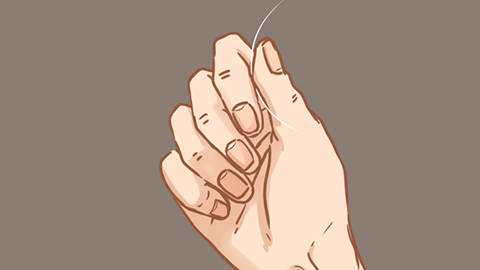
Hair undergoes three intrinsic metabolic cycles: anagen (growth phase), catagen (regression phase), and telogen (resting phase). Each hair follicle operates independently and cycles through these phases asynchronously. Consequently, hair in different phases exhibits distinct structural and functional characteristics. During the anagen phase, the dermal papilla enlarges, cellular division accelerates, and the hair matrix actively differentiates to form the hair shaft’s cortex and cuticle—reflecting vigorous proliferative activity. In contrast, during the catagen phase, the hair follicle gradually shrinks, cell numbers decline, the hair bulb assumes a characteristic shape, and proliferative activity ceases.
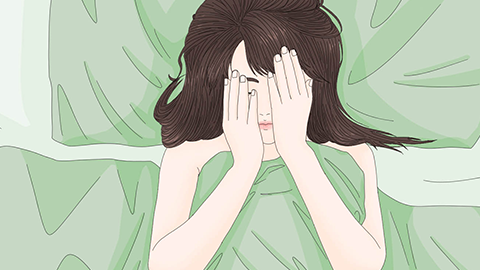
Sleep quality, emotional state, and physical fatigue are closely interrelated. Therefore, it is essential to ensure adequate sleep, maintain stable and optimistic emotions, and avoid excessive physical or mental strain. We hope this article has been helpful to you!




