


How to Read a Myopia Prescription
Jun 29, 2022
Source: Cainiu Health

Dr. Chen You
Introduction
When you receive your refraction report, you will see markings indicating “right eye” (OD) or “left eye” (OS). Following the right-eye marking is a plus (+) or minus (−) sign; myopia is indicated by a minus sign. For example, −3.00 D spherical (−3.00 DS) for the right eye denotes a simple spherical lens with 3.00 diopters of myopia. A myopia refraction report typically includes three key values: the spherical refractive error (myopic power), the cylindrical refractive error (astigmatic power), and the axis of the cylinder (astigmatic axis).
Regular eye examinations help monitor changes in vision and track the progression or improvement of myopia. By using red, green, and yellow light-spot targets with specific flashing durations and rhythms, these devices simulate moving objects at varying distances—thereby guiding the eyes to follow controlled movement trajectories, which may help improve myopia. But how should one interpret a myopia refraction prescription?
How to Read a Myopia Refraction Prescription
When you receive your refraction report, you’ll see markings indicating “OD” (right eye) or “OS” (left eye). Following the OD or OS notation, a plus (+) or minus (–) sign appears; myopia is indicated by a minus sign. For example, “–3.00 DS” for the right eye denotes a simple spherical lens correcting –3.00 diopters of myopia. A typical myopia refraction report includes three key values: spherical power (myopia degree), cylindrical power (astigmatism degree), and axis orientation (astigmatism axis). The letter “S” stands for spherical power (indicating myopia or hyperopia), while “C” (or “CYL”) indicates cylindrical power (astigmatism). A number following the “C” value specifies the axis position (in degrees) of the astigmatism.
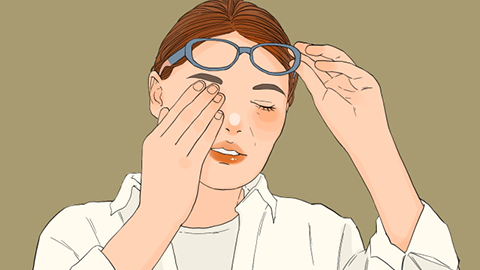
Myopia is a common ophthalmic condition characterized by the focal point of parallel light rays falling *in front of* the retina due to excessive refractive power or elongated axial length of the eye. This refractive error results in blurred, scattered images on the retina. In early-stage myopia, distance vision often fluctuates, and patients may develop esotropia (inward deviation of the eye) when viewing distant objects. Besides blurred distance vision, other symptoms may include strabismus, eye strain, dry eyes, headache, and nausea.

In daily life, patients should maintain a positive mindset, actively cooperate with their ophthalmologist’s treatment plan, take prescribed medications as directed (both in dosage and timing), and pay attention to routine eye care—so as to facilitate timely improvement of the condition. We hope this explanation has been helpful to you.





