


Can wearing convex lenses improve vision in myopia?
Jun 29, 2022
Source: Cainiu Health

Dr. Chen You
Introduction
Wearing convex lenses does not improve vision in myopic individuals. Patients with myopia should wear concave lenses, whereas those with hyperopia or presbyopia should wear convex lenses. Regardless of the lens power selected, a refraction examination is mandatory. For children under 12 years of age, cycloplegic refraction using atropine is required to obtain an accurate refractive measurement; adolescents aged 12–35 years require rapid cycloplegic refraction.
An increasing number of people are developing eye disorders, with myopia being one of the most common. Both adults and children can develop myopia. Individuals should take good care of their health—especially those who spend long hours staring at smartphones and computers—and pay particular attention to eye health. So, can wearing convex lenses improve vision in individuals with myopia?
Can wearing convex lenses improve vision in myopia?
No, wearing convex lenses does not improve vision in myopia. Individuals with myopia require concave lenses for correction, whereas convex lenses are prescribed for hyperopia (farsightedness) and presbyopia. Regardless of the lens power selected, a comprehensive refraction examination is mandatory. For children under 12 years old, cycloplegic refraction using atropine is required to obtain accurate refractive measurements. Adolescents aged 12 to 35 years should undergo rapid cycloplegic refraction to achieve more precise results.
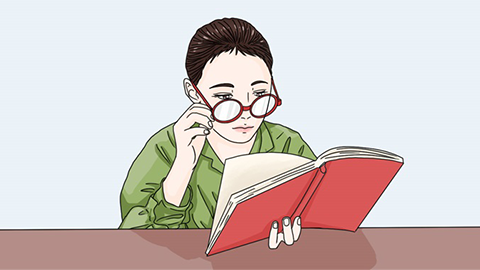
Myopia requires correction with concave lenses—not convex lenses. In myopic eyes, the crystalline lens is relatively more protruded, resulting in a shorter focal length than normal. Consequently, images of distant objects form in front of the retina. Concave lenses are necessary to diverge incoming light rays, thereby shifting the focal point backward onto the retina and enabling clear vision. For adults, wearing appropriately prescribed glasses provides clear, corrected vision, which is essential for optimal visual function; thus, concave lenses are required to correct refractive errors.
Individuals with myopia are advised to maintain proper posture during daily activities and study, avoid reading or studying under dim lighting or in poor environmental conditions, ensure adequate sleep, and engage in at least two hours of outdoor activity daily. We hope this information proves helpful.





