


How long can implanted intraocular lenses for myopia last?
Jun 29, 2022
Source: Cainiu Health

Dr. Chen You
Introduction
Implantable collamer lenses (ICLs) for myopia correction can last over ten years. However, their longevity directly depends on ocular hygiene, the surgeon’s technical expertise, and the quality of the intraocular lens. ICL implantation is primarily performed to correct myopia and astigmatism—especially high myopia. It has no direct adverse effects; the procedure is relatively straightforward, involves a very small incision, and does not damage the cornea. For children…
Myopia is one of the most common refractive errors. It occurs when, with the eye in a relaxed state, parallel light rays entering the eye focus in front of the retina—resulting in blurred vision due to the inability to form a sharp image on the retina. So, how long can an implanted intraocular lens (IOL) last for myopia correction?
How Long Can an Intraocular Lens for Myopia Last?
An intraocular lens implanted for myopia correction can typically last over ten years. However, its longevity depends directly on ocular hygiene, the surgeon’s technical expertise, and the quality of the artificial lens. Lens implantation is primarily performed to correct myopia and astigmatism—especially high myopia. The procedure carries no direct side effects, is relatively straightforward, involves a very small incision, and does not damage the cornea. In children, if an IOL is implanted at a very young age—before age three or five—the lens is extremely small; therefore, it usually requires removal and replacement with a second, appropriately sized IOL after the child reaches adulthood.
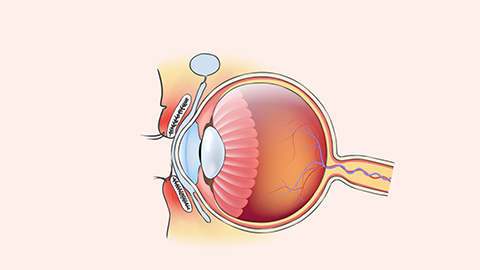
In adults, provided no complications arise, the implanted lens can remain functional for life. Modern IOLs are generally designed to remain stable and complication-free for approximately 60 years. Importantly, cases requiring lens removal and re-implantation are rarely due to inherent lens quality issues; rather, they usually result from postoperative complications—such as lens dislocation or injury causing the lens to fall into the vitreous cavity—necessitating surgical removal followed by secondary lens implantation.

In daily life, patients should maintain a positive mindset, actively cooperate with their physicians during treatment, take prescribed medications on time and in the correct dosage, and adhere to proper postoperative care—thereby facilitating optimal and timely recovery. We hope this information has been helpful.





