


Will myopia turn into presbyopia as I age?
Jun 29, 2022
Source: Cainiu Health

Dr. Chen You
Introduction
Presbyopia may develop in individuals with myopia as they age; however, people with myopia typically experience presbyopia later than those with normal vision. Presbyopia occurs due to decreased lens elasticity, resulting in blurred or unsustainable near vision. Because near-vision accommodation demands greater effort, reduced lens elasticity leads to the onset of presbyopic symptoms.
With rapid societal development, life stress is increasing significantly, and many people develop myopia. Myopia can severely impair patients’ daily lives and academic performance, necessitating prompt identification of appropriate treatment methods. Some individuals worry that myopia may progress to presbyopia as they age—so, does myopia turn into presbyopia in old age?
Does myopia become presbyopia with aging?
Myopia may coexist with presbyopia in older age, but individuals with myopia typically develop presbyopia later than those with normal vision (emmetropia). Presbyopia arises from reduced lens elasticity, leading to blurred or unsustainable near vision. This occurs because the eye’s ability to accommodate—i.e., adjust focus for near objects—declines; thus, diminished lens elasticity results in presbyopic symptoms. Individuals with hyperopia (farsightedness) tend to develop presbyopia earlier in life compared to those with myopia. Additionally, presbyopia incidence is influenced by visual habits: people engaged in fine-detail work—such as embroidery, carving, or other precision tasks—are at higher risk.

Myopia differs fundamentally from presbyopia. In myopia, light rays entering the eye are focused *in front of* the retina—rather than directly on the photoreceptor cells—resulting in blurred distance vision. Presbyopia, by contrast, stems from age-related natural degeneration of the eye’s accommodative capacity, causing difficulty focusing on near objects. Myopia and presbyopia are distinct conditions with no inherent causal relationship. Regardless of whether one has myopia, age-related ocular degeneration—and consequently presbyopia—will occur. However, myopic individuals often experience presbyopia later in life because the negative refractive correction required for myopia partially offsets the positive correction needed for presbyopia.
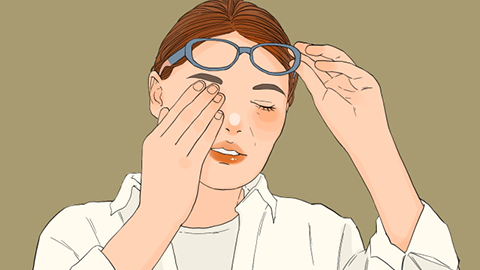
We recommend that patients adopt healthy visual habits: limit screen time (e.g., smartphones and computers), avoid staying up late, and increase outdoor activity. We hope this information proves helpful.





