


What medications are best for treating bronchitis in children?
Aug 24, 2022
Source: Cainiu Health

Dr. Guo Xiheng
Introduction
Bronchitis in children should be treated according to symptoms. For dry cough, antitussive medications such as Yumi Keli (Corn Granules) and Compound Sophoridine are recommended. Traditional Chinese medicine (TCM) options include Qingxuan Zhike Keli (Clearing Dizziness and Relieving Cough Granules). For cough with phlegm, antitussive and expectorant drugs—such as the Western medicine Yitanjing (Yi Tan Jing)—are indicated. Among proprietary Chinese medicines, formulations are categorized based on patterns of Cold-Wind or Wind-Heat; Tongxiefei Wan (Promoting Lung Qi and Resolving Phlegm Pills) is used for externally contracted Cold pathogens, while Xiao’er Fever-Cough-Asthma Oral Liquid is prescribed for children presenting with fever, cough, and wheezing. In addition to symptomatic treatment…
Bronchiectasis can also be triggered by diseases such as pertussis (whooping cough) and measles. Bronchiectasis is a condition that can occur at any age and may cause significant harm to the patient’s body. So, what medications are appropriate for children with bronchitis?
What Medications Are Appropriate for Children with Bronchitis?
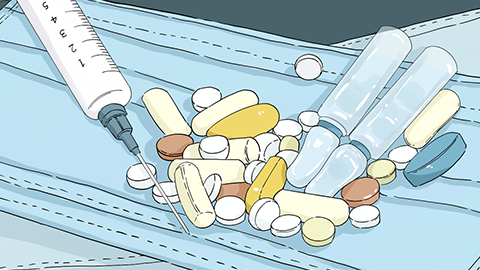
Treatment of pediatric bronchitis should be symptom-based. For dry cough, antitussive agents—such as corn granules and compound lobeline—are recommended. Traditional Chinese medicine (TCM) options include Qingxuan Zhike Granules. When cough is accompanied by sputum, expectorant-antitussive medications should be used—for example, the Western medication Yitanjing (a mucolytic and expectorant). Among proprietary Chinese medicines, differentiation is made between wind-cold and wind-heat patterns: Tongxie Fei Wan is indicated for externally contracted cold pathogens, while Xiao’er Fever-Cough-Asthma Oral Liquid is suitable for fever, cough, and wheezing in children. In addition to symptomatic treatment, nebulization therapy—under physician guidance—is another effective and direct therapeutic approach.

Additionally, the causative pathogen must be considered. If Mycoplasma infection is confirmed, macrolide antibiotics—such as erythromycin or azithromycin—are indicated. For other bacterial infections, cephalosporins or amoxicillin may be selected, provided no allergy is documented; these should always be administered under medical supervision. In treating pediatric bronchitis, controlling infection is the primary objective. If bacterial infection is confirmed, broad-spectrum antibiotics should be employed for effective management. In cases of viral infection, antiviral agents—such as ribavirin—should be used appropriately.
During symptomatic management, bronchodilators such as aminophylline or salbutamol may be recommended to relieve bronchospasm. We hope this information proves helpful.






