


Can surgical scars be completely removed?
Jan 24, 2025
Source: Cainiu Health

Dr. Liu Wenmin
Introduction
Whether surgical scars can be completely removed mainly depends on the scar size and individual constitution. Smaller scars in individuals who are not prone to scarring (non-scar体质) can usually be completely removed with timely treatment. However, for larger scars or individuals with a scar-prone constitution (scar体质), complete removal is more difficult. Nevertheless, with prompt and appropriate medical treatment, the size of the scar can be reduced.
Generally speaking, whether surgical scars can be completely removed mainly depends on the size of the scar, individual physical factors, and others. If the scar is small and the individual does not have a scarring predisposition, it may be possible to completely remove the scar. However, if the scar is large and the individual has a scarring predisposition, complete removal might not be achievable. For larger scars, timely medical treatment is recommended. Detailed analysis is as follows:
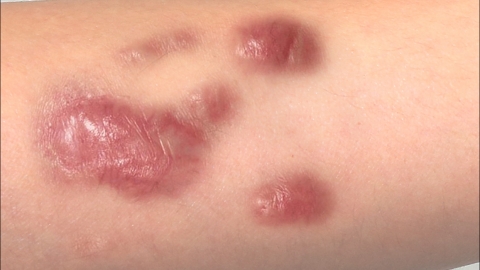
If the scar area is relatively small, the symptoms are not obvious, and there is no elevation or deformation of the scar tissue, and if the individual does not have a scarring predisposition, prompt intervention under a doctor's guidance may usually lead to complete removal. As instructed by a physician, topical medications such as asiaticoside cream, compound sodium heparin and allantoin gel, or mucopolysaccharide polysulfate cream may be used for treatment.
However, if the scar is large and symptoms are evident, with visible changes such as raised, hardened, or deformed scar tissue, and if the individual has a scarring predisposition, complete removal is usually difficult. Nevertheless, timely treatment after scar detection can often reduce the scar size and improve its appearance. If medication proves ineffective, prompt surgical intervention is recommended, such as scar excision, whereby the scar tissue is directly removed surgically.
Therefore, regardless of whether the scar can be completely removed, active cooperation with medical treatment is essential to alleviate scar symptoms. Additionally, sun protection is important during treatment to avoid ultraviolet radiation stimulating the wound area and affecting recovery.




