


What causes blisters on the soles of the feet?
Mar 22, 2025
Source: Cainiu Health

Dr. Liu Wenmin
Introduction
Blisters on the soles of the feet may be caused by excessive friction, sweat immersion, athlete's foot, eczema, dyshidrotic eczema, or other factors. The appropriate treatment depends on the specific cause and medical advice should be followed. Prolonged wearing of ill-fitting shoes, such as shoes that are too stiff, incorrect in size, or walking with improper posture, can lead to excessive friction and pressure on the skin of the soles, resulting in blisters.
In general, blisters on the soles of the feet may be caused by excessive friction, sweat浸渍, athlete's foot, eczema, dyshidrosis, and other factors. The solution depends on the specific cause and medical advice should be sought promptly for appropriate treatment. Details are as follows:
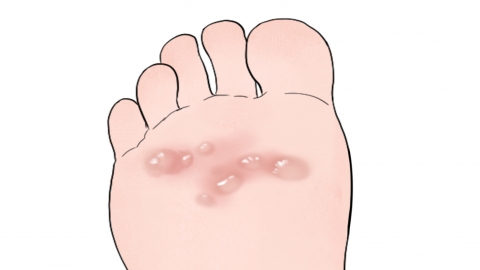
1. Excessive Friction: Prolonged wearing of ill-fitting shoes, such as shoes that are too stiff or of incorrect size, or improper walking posture can cause excessive friction and pressure on the skin of the soles, leading to blister formation. It is recommended to switch to properly fitting, breathable shoes and avoid prolonged walking or standing. For existing blisters, maintain local cleanliness and dryness, and avoid friction and pressure.
2. Sweat浸渍: The feet contain numerous sweat glands, and prolonged wearing of non-breathable shoes or socks may prevent sweat from evaporating, causing sweat浸渍 that softens and swells the skin, eventually forming blisters. It is important to maintain foot hygiene and dryness and choose breathable shoes and socks.
3. Athlete's Foot: Athlete's foot is a fungal infection of the skin. The vesicular type presents with blisters on the soles or between the toes, often accompanied by itching and scaling. Fungi thrive in warm, moist environments, and factors such as wearing non-breathable shoes or socks for long periods and poor foot hygiene are common causes. Antifungal medications such as amorolfine hydrochloride cream, luliconazole cream, or itraconazole capsules should be used according to medical guidance.
4. Eczema: Eczema is a chronic inflammatory skin condition that can be triggered by various internal and external factors. Foot eczema is often induced by prolonged exposure of the feet to moist and hot environments or contact with irritants, presenting with red patches on the soles and accompanied by itching. Anti-inflammatory treatments such as clobetasol propionate cream, zinc oxide ointment, or calamine lotion may be used under medical supervision.
5. Dyshidrosis: Dyshidrosis is a blistering skin condition affecting the palms or soles, associated with impaired sweat excretion, emotional stress, and environmental factors. Foot dyshidrosis is commonly caused by overactive sweat glands and impaired sweat drainage, presenting with multiple small blisters on the soles, often accompanied by a burning sensation. Treatment options include mometasone furoate cream, halometasone cream, or levocetirizine dihydrochloride tablets, as directed by a physician.
In daily life, maintaining good foot hygiene, keeping the feet dry, and limiting consumption of spicy or irritating foods are recommended.
References:
[1] Zhang Xuejun. Dermatology and Venereology [M]. 9th Edition. Beijing: People's Medical Publishing House, 2018.
[2] Li Ruoyu, Gao Xinghua. Chinese Journal of Clinical Mycology [J]. Chinese Journal of Clinical Mycology, 2019.






