


Can Perilla seed be combined with Cornus officinalis (Shanzhuyu)?
Mar 24, 2025
Source: Cainiu Health

Dr. Zhang Xiuhong
Introduction
Under normal circumstances, Perilla seed can be combined with Cornus fruit, but should be used under the guidance of a qualified traditional Chinese medicine practitioner. Perilla seed is warm in nature and pungent in taste, and has the effects of lowering Qi, resolving phlegm, relieving cough, and alleviating asthma. Cornus fruit is warm in nature and sour in taste, and functions to nourish the liver and kidneys and to astringe and solidify essence. When used together, these two herbs may have a synergistic effect in certain situations, such as in the treatment of cough and asthma accompanied by symptoms of kidney deficiency.
Generally speaking, Perilla fruit can be combined with Cornus officinalis, but it should be used under the guidance of a professional traditional Chinese medicine (TCM) practitioner. The detailed analysis is as follows:
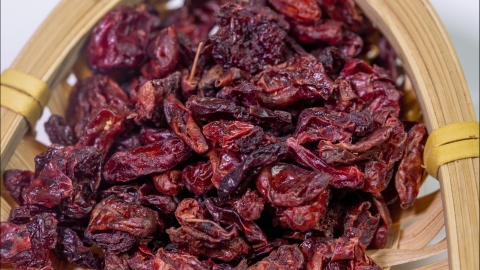
Perilla fruit is warm in nature and pungent in taste. It functions to lower Qi, resolve phlegm, relieve cough, and alleviate asthma. It is commonly used to treat symptoms such as poor lung Qi circulation, chest tightness, and cough. Cornus officinalis, on the other hand, is warm in nature and sour in taste. It can nourish the liver and kidneys and has an astringent effect, often used to treat symptoms of liver and kidney deficiency such as soreness and weakness of the waist and knees, dizziness, tinnitus, and seminal emission. When combined, these two herbs may produce a synergistic effect in certain situations, such as treating cough and asthma accompanied by symptoms of kidney deficiency.
Although Perilla fruit and Cornus officinalis can be used together, the specific dosage and method of use must be determined according to the individual condition and constitution. Using them without considering personal constitution and specific illness may lead to adverse reactions such as indigestion or allergic responses. Before use, it is advisable to consult a professional TCM practitioner to avoid reduced efficacy due to interactions between the herbal properties.
In daily life, it is recommended to follow medical instructions, understand the properties and dosages of medicinal materials, and avoid adjusting dosages or substituting herbs on one's own in order to ensure effectiveness and safety.
References
[1] Wu Jianjun, Zhang Yi, Du Weisha, et al. Investigation of Professor Jiang Liangduo's medication patterns for chronic obstructive pulmonary disease based on the theory of body condition using a Bayesian network[J]. Guide to Chinese Medicine, 2025, 31(02): 145-151.
[2] Wang Jiajun, Wang Zeping, Wang Xuelian, et al. Research progress on the chemical constituents and pharmacological effects of Cornus officinalis[J]. Chinese Herbal Medicines, 2025, 56(03): 1088-1103.





