Can patients with intestinal tuberculosis take Rehmannia glutinosa (Shu Di Huang)?
Apr 07, 2025
Source: Cainiu Health

Dr. Zhang Xiuhong
Introduction
Patients with intestinal tuberculosis can take cooked rehmannia (Shu Di Huang), but should do so under the guidance of a physician. Cooked rehmannia is slightly warm in nature, sweet in taste, and enters the liver and kidney meridians. It has the functions of nourishing the blood, enriching yin, replenishing essence, and fortifying the bone marrow. It is suitable for symptoms such as pallor due to blood deficiency, yin deficiency of the liver and kidney, and weakness and soreness in the lower back and knees. For intestinal tuberculosis patients exhibiting manifestations of yin deficiency and blood insufficiency or deficiency of the liver and kidney, such as dizziness, tinnitus, soreness and weakness in the waist and knees, and night sweats, cooked rehmannia may be appropriately used.
Generally speaking, patients with intestinal tuberculosis can take prepared rehmannia root (Shu Di Huang), but it should be used under the guidance of a physician. The detailed explanation is as follows:
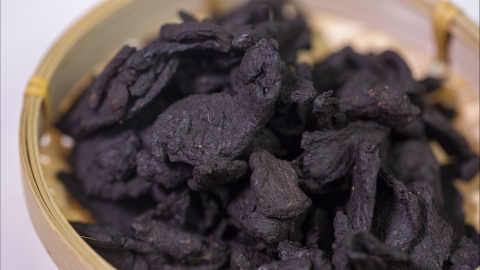
Prepared rehmannia root is slightly warm in nature, sweet in taste, and enters the liver and kidney meridians. It functions to nourish the blood, enrich yin, and replenish essential substances and marrow. It is suitable for symptoms such as blood deficiency with sallow complexion, yin deficiency of the liver and kidney, and weakness and soreness of the waist and knees. For intestinal tuberculosis patients with manifestations of yin deficiency and blood insufficiency or liver and kidney deficiency, such as dizziness, tinnitus, weakness and soreness of the waist and knees, and night sweats, an appropriate amount of prepared rehmannia root may be used under a physician's guidance to nourish yin and supplement blood.
Patients with intestinal tuberculosis often develop Qi and blood deficiency due to long-term consumption. However, some patients may also have spleen and stomach weakness or internal accumulation of damp-heat. Prepared rehmannia root has a sticky and rich nature, which may exacerbate symptoms such as abdominal distension, reduced appetite, and loose stools in patients with weak spleen and stomach. Prepared rehmannia root should not be taken with drugs that counteract its effects, such as Veratrum (Li Lu), and should not be consumed together with foods such as radish or scallion whites, to avoid reducing its therapeutic effectiveness. Patients vary in their tolerance to prepared rehmannia root, so its use should be adjusted according to individual symptoms.
Patients with intestinal tuberculosis should consult a TCM physician to determine whether to use prepared rehmannia root based on their constitution and condition. If needed, it can be combined with Qi-regulating herbs such as cardamom (Sha Ren) and costus root (Mu Xiang), or spleen-strengthening herbs such as codonopsis (Dang Shen) and white atractylodes (Bai Zhu), to reduce the sticky and rich nature of prepared rehmannia root. After taking it, patients should monitor for adverse effects such as abdominal distension or diarrhea, and if any abnormalities occur, discontinue use immediately and seek medical attention.