


What is the difference between Pueraria lobata and Kudzu root?
May 13, 2025
Source: Cainiu Health

Dr. Yu Yongchao
Introduction
Under normal circumstances, the main differences between Pinge (Pueraria lobata) and Gegen (Pueraria thomsonii) include their sources, appearance, medicinal value, application scope, and methods of use. Pinge originates from the dried roots of Pueraria lobata, a leguminous plant that is primarily cultivated artificially. Gegen comes from the dried roots of Pueraria thomsonii, a leguminous vine plant that is more adaptable and commonly grows in wild environments such as hillsides and grassy areas along roadsides.
Generally speaking, the differences between Pinge (Pueraria lobata) and Gegen (Radix Puerariae) are mainly reflected in their sources, appearance, medicinal values, application scopes, and methods of use. The specific analysis is as follows:
1. Source
Pinge comes from the dried roots of Pueraria lobata, a leguminous vine plant, mostly artificially cultivated. Gegen comes from the dried roots of wild Pueraria (Pueraria lobata), which is more adaptable and commonly grows in wild environments such as hillsides and roadside grasses.
2. Appearance
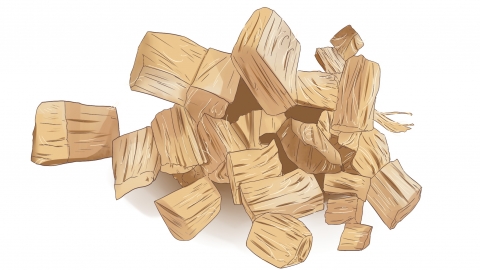
Pinge is cylindrical, spindle-shaped, or semi-cylindrical, with a yellowish-brown or brown surface, longitudinal wrinkles, and horizontal lenticels. It is solid and heavy, with a rough, yellowish-white cross-section that is slightly starchy and weak in fiber, showing light brown concentric ring patterns formed by fibers. Gegen is usually cut into thick rectangular slices or small cubes, with a mostly yellowish-white or pale brown outer skin, longitudinal wrinkles, and a relatively rough texture. The cross-section is slightly fibrous, yellowish-white, with indistinct textures, sometimes showing concentric rings but not as obvious as those of Pinge. Its texture is relatively looser than that of Pinge.
3. Medicinal Value
Pinge shares similar medicinal properties with Gegen, including relieving muscle tension and fever, promoting saliva production to quench thirst, and raising yang energy to stop diarrhea. However, Pinge is relatively weaker than Gegen in relieving muscle tension and fever, but slightly stronger in promoting saliva production and raising yang energy to stop diarrhea. Gegen is more effective in relieving muscle tension and fever, improving cardiovascular circulation, lowering blood sugar, and antioxidant effects. It is commonly used to treat symptoms such as feverish colds with headache, stiff neck and back, thirst, and diabetes. It also plays a role in the prevention and treatment of cardiovascular diseases and can improve microcirculation and protect vascular endothelial cells.
4. Application Scope
In clinical practice, Pinge is mainly used to treat conditions such as thirst due to heat illness, yin deficiency with excessive thirst, and heat-induced diarrhea. It is widely used in dietary therapy due to its better taste and high starch content, often used in making various delicacies such as Pinge soup and Pinge cake, which have certain health benefits. In addition to being used clinically to treat various diseases, Gegen is also commonly used in the development of health products, such as Gegen tea and Gegen oral liquid.
5. Methods of Use
Pinge can be directly sliced and used in herbal medicine, for the preparation of decoctions, pills, powders, and other traditional Chinese medicine formulations. In dietary therapy, Pinge can be stewed or boiled with other ingredients, made into soup, or ground into powder to make various pastries and desserts. The usage of Gegen is similar to that of Pinge; it can be sliced and decocted or made into Gegen powder for consumption. Additionally, Gegen is a common ingredient in some patent Chinese medicines. Moreover, Gegen can also be used externally, such as making masks or ointments with Gegen extracts for treating skin diseases or for beauty and skin care purposes.
Although both Pinge and Gegen belong to the legume family, due to species differences, component content, and different directions of artificial breeding, they eventually differ in usage and characteristics, so selection should be based on specific needs.




