


Can placental remnants remain after a cesarean section?
Nov 11, 2025
Source: Cainiu Health

Dr. Zhang Lu
Introduction
In general, whether placental remnants remain after cesarean section mainly depends on the precision of the surgical procedure and the condition of placental attachment. After cesarean delivery, vaginal blood loss, duration of bleeding, and abdominal pain should be closely monitored. If increased bleeding, worsening abdominal pain, or fever occurs, the physician should be informed promptly. Postoperative ultrasound follow-up should be performed as prescribed to confirm whether any residual tissue remains in the uterine cavity.
In general, whether placental residue occurs after cesarean section mainly depends on the meticulousness of the surgical procedure and the condition of placental attachment. The specific analysis is as follows:
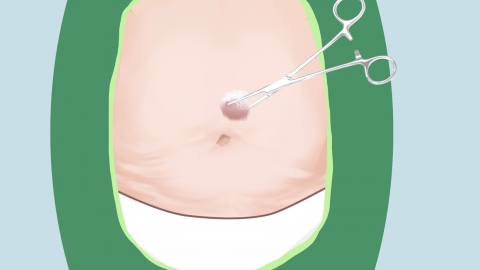
When a cesarean section is performed carefully, with the surgeon thoroughly removing the placenta and examining the uterine cavity to confirm no placental tissue remains—and when the placenta is normally attached without adhesions or invasive implantation—placental residue typically does not occur. In such cases, postoperative uterine contraction is good, vaginal bleeding gradually decreases, and the body recovers normally without complications caused by retained placental tissue.
However, if during the cesarean procedure the placenta is not completely removed, or if there are conditions such as placental adhesion or invasion into the uterine muscle layer (placenta accreta), some placental tissue may remain in the uterine cavity, leading to retained placenta. This can impair uterine contraction and may cause persistent postoperative vaginal bleeding, abdominal pain, or infection. If not promptly treated, it could lead to anemia or intrauterine adhesions, negatively affecting recovery.
After cesarean delivery, close monitoring of the amount and duration of vaginal bleeding and any abdominal pain is essential. If increased bleeding, worsening abdominal pain, or fever occurs, the physician should be informed immediately. Follow-up ultrasound examinations should be performed as prescribed to confirm whether any residual tissue remains in the uterine cavity. During recovery, maintain good personal hygiene, avoid tub baths and unhygienic sexual intercourse to prevent infection, and ensure adequate rest to promote healing.



