Is lacrimal incontinence a sign of mild depression?
Nov 17, 2025
Source: Cainiu Health

Dr. Zhang Baohua
Introduction
The tear incontinence constitution is characterized by uncontrollable tearing during emotional fluctuations, after which emotions usually stabilize quickly. Individuals generally maintain stable moods under normal conditions, without persistent low mood or loss of interest. In contrast, mild depression is primarily defined by at least two weeks of persistent low mood, accompanied by reduced interest in activities, decreased energy, and abnormalities in sleep or appetite, significantly disrupting normal daily functioning. The fundamental features of these two conditions are distinct.
Generally speaking, having a predisposition to involuntary tearing is not equivalent to mild depression. The former mostly refers to heightened physiological responses triggered by emotions, while the latter is a mental health condition characterized by persistent low mood. If concerned, it is advisable to seek medical consultation in advance. Detailed analysis is as follows:
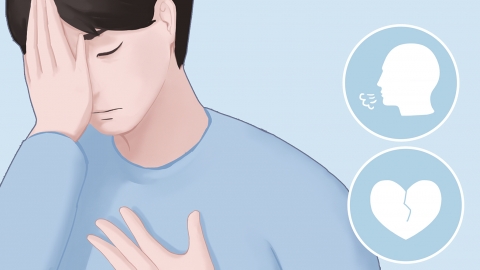
A tendency toward involuntary tearing manifests as uncontrollable crying during emotional fluctuations. After crying, emotions usually stabilize quickly, and individuals remain emotionally stable under normal conditions, without persistent sadness or loss of interest. In contrast, mild depression is primarily defined by at least two weeks of persistent low mood, accompanied by reduced interest in activities, decreased energy, and abnormalities in sleep or appetite, significantly affecting daily functioning. The core characteristics of these two conditions are fundamentally different.
Some individuals with mild depression may exhibit symptoms resembling involuntary tearing due to heightened emotional sensitivity, but those prone to involuntary tearing do not necessarily have depressive tendencies. Involuntary tearing is mostly related to individual physiological mechanisms of emotional regulation and may be influenced by personality traits and nervous system sensitivity. Mild depression, however, involves multiple factors such as psychological stress and changes in neurotransmitters, classifying it as a mental health issue requiring attention. Thus, the underlying causes and impact scopes of the two conditions differ.
If persistent low mood occurs alongside frequent episodes of involuntary tearing, or if daily functioning is significantly affected, timely evaluation at a psychiatric or psychological clinic is recommended. Avoid making conclusions based solely on a single symptom.