


What are the symptoms of chronic conjunctivitis?
Nov 17, 2025
Source: Cainiu Health

Dr. Wang Shuai
Introduction
Common symptoms of chronic conjunctivitis generally include increased eye discharge, itching and foreign body sensation, conjunctival congestion and redness, eyelid margin inflammation, and mild visual disturbance. The eye discharge is typically a small amount of mucoid or white foamy material, which may stick the eyelashes together upon waking, making it difficult to open the eyes. The discharge does not overflow in large quantities but tends to adhere to the eyelid margins or corners of the eyes.
Common symptoms of chronic conjunctivitis generally include increased eye discharge, itching and foreign body sensation, conjunctival congestion and redness, eyelid margin inflammation, and mild impact on vision. A detailed analysis is as follows:
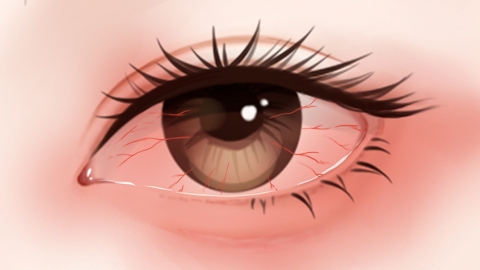
1. Increased eye discharge: The discharge is typically small in amount, mucoid or white and frothy. It may stick the eyelashes together upon waking, making it difficult to open the eyes. The discharge does not overflow significantly but tends to adhere to the eyelid margins or corners of the eyes, reappearing shortly after cleaning.
2. Itching and foreign body sensation: Frequent itching causes patients to unconsciously rub their eyes. This is often accompanied by a mild sensation of a foreign body, as if fine dust or fibers have entered the eye. The sensation becomes more noticeable during blinking or closing the eyes, although no actual foreign body is usually found upon examination.
3. Conjunctival congestion and redness: The white part of the eye (conjunctiva) shows mild to moderate congestion, appearing pale red or dark red. The congestion is mainly distributed in the interpalpebral conjunctiva and does not spread across the entire sclera. The degree of redness varies, worsening with eye fatigue or overuse and slightly improving with rest.
4. Eyelid margin inflammation: The eyelid margins may show mild redness, swelling, and scaling. Fine scales may accumulate at the base of the eyelashes. Some patients may develop minor erosion or pinpoint bleeding along the eyelid margins. Long-term inflammation can lead to eyelash loss or trichiasis, further aggravating eye discomfort.
5. Mild visual disturbance: Most patients do not experience significant vision loss. However, some may have transient blurred vision due to inflammatory irritation or discharge adhering to the corneal surface. The blurriness typically resolves temporarily after cleaning the eyes or blinking and does not result in persistent visual impairment.
If the above symptoms persist for more than two weeks, prompt consultation with an ophthalmologist is recommended to determine the underlying cause (such as bacterial infection, allergy, or environmental irritants). During treatment, avoid rubbing the eyes, maintain good ocular hygiene, use medications as prescribed, and minimize exposure to irritants such as dust and cooking fumes to prevent symptom recurrence.








