What causes dry and gritty eyes, and how can it be relieved?
Nov 19, 2025
Source: Cainiu Health

Dr. Wang Lei
Introduction
In general, dry and irritated eyes may be caused by factors such as dry environments, excessive eye strain, visual fatigue, dry eye syndrome, or Sjögren's syndrome. It is recommended to seek medical attention promptly, identify the underlying cause, and receive appropriate symptomatic relief under a doctor's guidance. In daily life, consume more foods rich in vitamin A, such as carrots and spinach, as well as deep-sea fish rich in Omega-3 fatty acids.
Under normal circumstances, dry and irritated eyes may be caused by factors such as dry environments, excessive eye strain, visual fatigue, dry eye syndrome, or Sjögren's syndrome. It is recommended to seek medical attention promptly to determine the underlying cause and receive appropriate symptomatic relief under a doctor’s guidance. Specific causes are analyzed as follows:
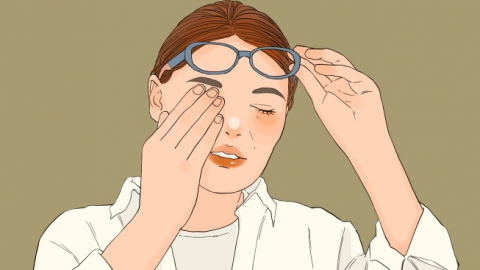
1. Dry environment: Prolonged exposure to air-conditioned rooms or windy, sandy environments with low humidity can shorten the tear film’s retention time on the ocular surface. Using a humidifier indoors to maintain humidity between 40%–60%, and wearing protective eyewear outdoors, can help reduce tear evaporation.
2. Eye strain: Staring at electronic screens for extended periods reduces blinking frequency to one-third of normal, impairing adequate lubrication of the ocular surface. Take a 5-minute break every 30 minutes of screen use to look into the distance, consciously increase blinking, and maintain a distance of 30–50 cm between the eyes and the screen.
3. Visual fatigue: Persistent tension in the eye muscles slows blood circulation and affects tear secretion, often accompanied by eye soreness and blurred vision. Patients should use medications such as compound methionine and vitamin B12 eye drops, naphazoline-pheniramine eye drops, or sodium hyaluronate eye drops as directed by a physician, and perform eye exercises twice daily.
4. Dry eye syndrome: Insufficient tear production or an unstable tear film leads to inadequate ocular surface lubrication, causing sensations of dryness and foreign body discomfort. Treatments may include hypromellose eye drops, polyethylene glycol eye drops, or carboxymethylcellulose sodium eye drops, used under medical supervision. Avoid frequent use of eye drops containing preservatives.
5. Sjögren's syndrome: Autoimmune abnormalities damage the lacrimal glands, significantly reducing tear production, often accompanied by symptoms such as dry mouth. Treatment may involve cyclosporine eye drops, tacrolimus eye drops, or hydroxychloroquine tablets as prescribed. In severe cases, punctal plug insertion may be performed to block the tear ducts and reduce tear drainage.
In daily life, consume more foods rich in vitamin A—such as carrots and spinach—and Omega-3-rich deep-sea fish. Avoid rubbing the eyes, choose non-irritating eye care products, ensure sufficient sleep, and improve dry eye symptoms through comprehensive eye care.