What are the vital signs and their normal values?
Nov 25, 2025
Source: Cainiu Health

Dr. Tian Hongbo
Introduction
Common vital signs in the human body generally include body temperature, pulse, respiration, blood pressure, and blood oxygen saturation. Body temperature refers to the internal temperature of the body, reflecting the balance between metabolism and heat dissipation. The normal range is between 36.0°C and 37.2°C, with slight variations depending on the measurement site (such as axillary, oral, or rectal). Values outside this range may indicate an underlying physiological abnormality.
Common vital signs in the human body generally include body temperature, pulse, respiration, blood pressure, and blood oxygen saturation. A detailed analysis is as follows:
1. Body Temperature: Refers to the internal temperature of the human body, reflecting the balance between metabolic heat production and heat dissipation. The normal range is between 36.0°C and 37.2°C. Slight variations may occur depending on the measurement site (such as underarm, oral, or rectal). Values outside this range may indicate an abnormal condition.
2. Pulse: Refers to the frequency of arterial pulsations, which corresponds to heart rate. In healthy adults at rest, the normal pulse rate ranges from 60 to 100 beats per minute, with a regular rhythm and moderate strength. Rates that are too fast or too slow, or irregular rhythms, may reflect changes in cardiac function or overall physical condition.
3. Respiration: Refers to the process by which the body inhales oxygen and exhales carbon dioxide. In healthy adults at rest, the normal respiratory rate is 12 to 20 breaths per minute, with steady rhythm and even depth. Abnormal frequency, rapid breathing, or shallow, slow breathing may indicate problems in the respiratory or circulatory systems.
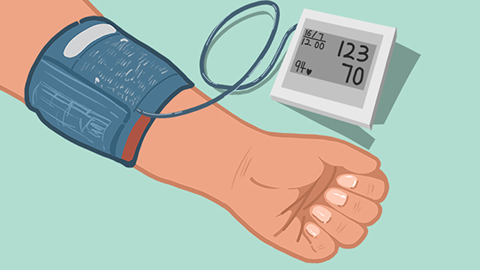
4. Blood Pressure: Refers to the pressure exerted by circulating blood against the walls of blood vessels. In healthy adults, normal systolic blood pressure (the "high" pressure) ranges from 90 to 139 mmHg, and diastolic blood pressure (the "low" pressure) ranges from 60 to 89 mmHg. Both high and low blood pressure can affect organ perfusion, so changes in these values should be monitored carefully.
5. Blood Oxygen Saturation: Refers to the percentage of hemoglobin binding sites in the bloodstream occupied by oxygen, reflecting the body's oxygen supply status. In healthy adults at sea level, oxygen saturation should be no less than 95%. Values below this level may indicate hypoxia, and symptoms such as chest tightness or dizziness should be monitored closely.
When monitoring vital signs in daily life, measurements should be taken while the body is at rest to ensure accuracy. If any parameter consistently falls outside the normal range or is accompanied by physical discomfort, prompt medical evaluation is recommended.