How do bacteriophages eliminate bacteria?
Dec 03, 2025
Source: Cainiu Health

Dr. Liu Wenmin
Introduction
Phages generally eliminate bacteria through mechanisms such as inhibition of cell wall synthesis, lytic enzymes destroying the cell wall, interference with metabolic processes, lytic cycle replication, and precise targeted infection. Phages interfere with the bacterial cell wall construction process via specific mechanisms, weakening the cell wall and ultimately causing bacterial lysis. This mode of action directly disrupts the foundation of bacterial survival, depriving bacteria of their protective barrier.
Phages generally eliminate bacteria through mechanisms such as inhibiting cell wall synthesis, using lytic enzymes to destroy the cell wall, interfering with metabolic processes, lytic cycle replication, and precise targeted infection. A detailed analysis is as follows:
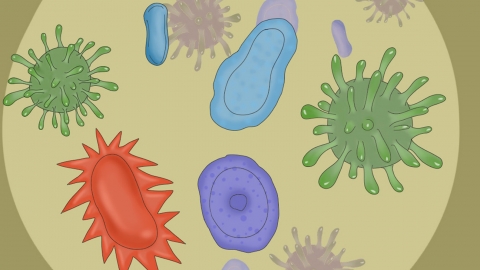
1. Inhibition of cell wall synthesis: Phages interfere with the bacterial cell wall construction process through specific mechanisms, weakening the cell wall and ultimately causing bacterial lysis. This mode of action directly undermines the foundation of bacterial survival, depriving bacteria of their protective barrier.
2. Lytic enzyme destruction of the cell wall: The lytic enzymes carried by phages can break down key components of the bacterial cell wall, compromising its structural integrity. Once the cell wall is disrupted, internal bacterial contents leak out, leading to bacterial death.
3. Interference with metabolic processes: During replication inside bacteria, phages consume large amounts of host resources, disrupting normal bacterial metabolic activities. This competition for resources prevents bacteria from sustaining vital functions, eventually leading to collapse.
4. Lytic cycle replication: Lytic phages complete their proliferation through five stages—adsorption, injection, replication, assembly, and lysis. Each cycle can produce hundreds of progeny phages, resulting in an exponential killing effect that rapidly eliminates large numbers of bacteria within a short time.
5. Precise targeted infection: Phages exhibit strict host specificity, meaning they can only infect specific types of bacteria. This characteristic enables them to accurately target pathogens while avoiding damage to normal microbiota, thereby enhancing treatment safety.
Phage therapy should be conducted under the guidance of professional institutions. Prior to use, genetic sequencing should be performed to identify the infecting bacterial strain and select the appropriate matching phage type. Bacterial resistance changes must be closely monitored during treatment, and when necessary, phage cocktail therapy may be employed to enhance efficacy.