


Which is better for qi and blood deficiency, acupuncture or taking Chinese herbal medicine?
Dec 09, 2025
Source: Cainiu Health

Dr. Sun Lianqing
Introduction
Both acupuncture and taking traditional Chinese herbal medicine have their own advantages in regulating qi and blood deficiency, and the choice should be based on individual constitution and severity of symptoms. Acupuncture works by stimulating specific points to unblock meridians and regulate the flow of qi and blood. It acts relatively quickly and is especially suitable for cases involving both stagnation and deficiency of qi and blood, or for individuals who cannot tolerate the taste of herbal medicine. Since it does not require oral medication, acupuncture directly affects the meridians and internal organs, effectively alleviating symptoms such as fatigue and dizziness, while placing minimal burden on the gastrointestinal system.
Generally, both acupuncture and herbal medicine have their own advantages in regulating qi and blood deficiency. The choice should be based on individual constitution and severity of symptoms, with no absolute superiority of one over the other. If uncertain, it is recommended to consult a practitioner for pattern differentiation before determining the appropriate treatment plan. Specific analysis is as follows:
Acupuncture works by stimulating specific acupoints to unblock meridians and regulate qi and blood flow. It takes effect relatively quickly and is suitable for cases involving both qi-blood stagnation and deficiency, or for individuals who are sensitive to the taste of herbal medicine. This method does not require oral medication and directly influences the meridians and internal organs, effectively alleviating symptoms such as fatigue and dizziness, while placing minimal burden on the gastrointestinal system.
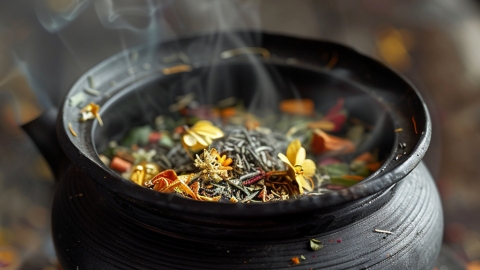
Herbal medicine focuses on regulating internal organs, using formula combinations to replenish qi and blood at the root cause. It is particularly suitable for cases of pure qi-blood deficiency, or those accompanied by spleen-stomach weakness or liver-kidney insufficiency. After digestion and absorption, herbal remedies take effect gradually, offering more comprehensive and long-lasting regulation. Formulas can be flexibly adjusted according to individual constitutions, making them well-suited for complex symptom patterns.
Prior to choosing a调理 method, it's important to clearly understand your specific symptoms to avoid blind experimentation. Whether opting for acupuncture or herbal medicine, treatment should always be conducted under the guidance of qualified professionals. Additionally, maintaining regular作息, balanced diet, and healthy lifestyle during the调理 process can enhance effectiveness and shorten recovery time.


