


How long does it take for a 2.1 × 1.6 mm follicle to ovulate?
May 26, 2026
Source: Cainiu Health

Dr. Zhang Lu
Introduction
When the follicle reaches a size of 2.1 × 1.6 cm, ovulation typically occurs spontaneously within 24–48 hours. However, the exact timing varies among individuals and should be assessed comprehensively based on follicular morphology, hormone levels (e.g., LH surge), and individual physiological characteristics. Note that ovulation timing is only an estimate, with considerable inter-individual variability. During conception attempts, frequent monitoring and excessive anxiety are unnecessary.
Under normal circumstances, when a follicle reaches a size of 2.1 × 1.6 cm, it typically ruptures and releases the oocyte spontaneously within 24–48 hours. However, the exact timing varies significantly among individuals and must be assessed comprehensively based on follicular morphology, hormonal levels, and individual physiological factors. A detailed analysis follows:
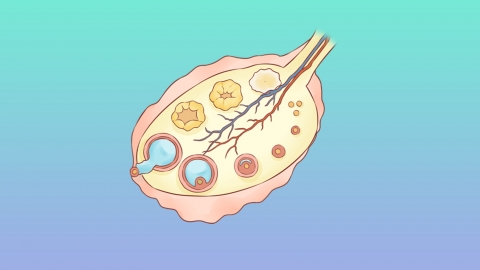
When a follicle measures 2.1 × 1.6 cm and exhibits optimal overall development, ovulation most commonly occurs within 24 hours. Specifically, if the follicle appears full, taut, and well-defined—with no flattening or indistinct margins—and if luteinizing hormone (LH) levels approach the preovulatory surge peak while estradiol levels are adequate, ovulation is likely to proceed rapidly. Additional favorable conditions include stable endocrine function, regular sleep-wake cycles, emotional calmness, absence of excessive physical fatigue or anxiety, and healthy ovarian function—under which circumstances follicular maturation and rupture usually occur naturally within 24 hours.
If follicular development or the individual’s physiological status is slightly suboptimal, ovulation may be delayed until within 48 hours. For instance, a follicle of this size exhibiting mild flattening, reduced turgor, or slightly indistinct margins—indicating borderline maturity—or accompanied by a slower rise in reproductive hormones failing to generate an effective LH surge, may delay final follicular rupture. Concurrent minor endocrine fluctuations, sleep deprivation, mental stress, or physical fatigue can further slow the process, resulting in ovulation occurring up to 48 hours after reaching this size.
Note that the estimated ovulation time remains only an approximation due to substantial inter-individual variability. During conception attempts, frequent monitoring and excessive anxiety should be avoided, as these may adversely affect endocrine balance. It is advisable to maintain moderate rest, avoid strenuous exercise, and schedule intercourse appropriately around the predicted ovulation window. If follow-up ultrasound examination reveals no ovulation beyond 48 hours, prompt evaluation for potential abnormalities—such as luteinized unruptured follicle (LUF) syndrome—is recommended.




