Efficacy and Side Effects of Drinking Angelica Sinensis (Danggui) Decoction
Apr 25, 2022
Source: Cainiu Health

Dr. Zhao Haiming
Introduction
It requires specific active ingredients to address the issue effectively. Secondly, it is essential to understand the therapeutic effects of *Angelica sinensis* (Danggui). *Angelica sinensis* functions to nourish and invigorate the blood, regulate menstruation and alleviate pain, and moisten the intestines to promote bowel movement. It is primarily used for nourishing the blood and resolving blood stasis; therefore, it is especially suitable for individuals with blood deficiency or blood stasis. *Angelica sinensis* is divided into two parts: the root head (Danggui Tou) and the root tail (Danggui Wei). The root head is used for nourishing the blood, whereas the root tail consists of the fibrous roots.
Consuming Angelica sinensis (Danggui) by soaking it in water is generally not recommended. Why? First, when Danggui is soaked in water, only minimal amounts of its active constituents are extracted.
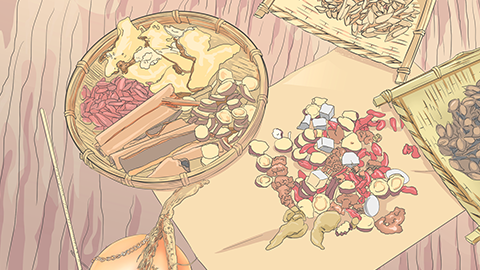
Effects and Side Effects of Consuming Danggui-Infused Water
Effective therapeutic outcomes require sufficient concentrations of bioactive compounds. Second, it is essential to understand Danggui’s pharmacological properties: it nourishes the blood, invigorates blood circulation, regulates menstruation, alleviates pain, moistens the intestines, and promotes bowel movements. As a blood-tonifying herb with strong blood-activating and stasis-resolving effects, Danggui is particularly suitable for individuals with blood deficiency or blood stasis. Danggui is anatomically divided into two parts—the “head” (Danggui Tou) and the “tail” (Danggui Wei). The head is primarily used for nourishing blood, whereas the tail—comprising the fibrous roots—exhibits stronger blood-activating effects than blood-nourishing ones. Thus, individuals with blood deficiency may benefit from consuming Danggui-infused water.
Naturally, those presenting both blood deficiency and blood stasis may derive even greater benefit. Conversely, individuals with robust constitutions and a reddish tongue—indicative of internal heat—are unsuitable candidates, as Danggui is inherently pungent and warm in nature and therefore appropriate mainly for those with cold-dominant patterns. Finally, although Danggui is warm and pungent, it also possesses laxative properties; thus, individuals experiencing loose or foul-smelling stools should avoid its use. If clinically indicated, Danggui must be combined with spleen-strengthening and qi-tonifying herbs to achieve optimal therapeutic outcomes.
Consuming Danggui-infused water offers several potential benefits: Danggui is rich in vitamin A, which may help treat ocular conditions such as eye strain and blurred vision; it moistens the intestines, relieves intestinal dryness, facilitates defecation, and alleviates constipation. Most importantly, Danggui tonifies both blood and qi; therefore, Danggui-infused water may be used to treat dual deficiency of qi and blood. However, certain side effects may occur. For instance, due to its blood-activating properties, excessive consumption may provoke bleeding or exacerbate preexisting hemorrhagic disorders.