


What medications are available for menopause?
May 17, 2022
Source: Cainiu Health

Dr. Lv Aiming
Introduction
In Traditional Chinese Medicine (TCM), this condition is diagnosed as Yin deficiency—specifically, Liver and Kidney Yin deficiency with internal heat due to Yin deficiency. Medications that nourish Yin and clear heat—such as Bao Kun Wan, Zuo Gui Wan, and Bai Di Huang Wan—may be prescribed.
If symptoms are predominantly those of Qi deficiency—such as fatigue, shortness of breath, palpitations, and excessive sweating—Qi-tonifying formulas like Sheng Mai Yin or Yu Ping Feng Granules may be considered.
For insomnia accompanied by frequent dreams, sedative and spirit-calming herbal remedies (e.g., Zao Ren An Shen Ye, Shu Gan Jie Yu Capsules) or Western medications such as diazepam may be used.
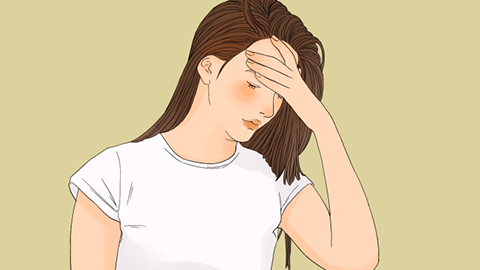
These are symptoms associated with the menopausal transition (perimenopause). Some women experience more severe manifestations, including hot flashes, night sweats, mood swings, irritability, severe insomnia, and generalized fatigue. What medications are available for managing menopausal symptoms?
Medications for Menopause
Women undergoing menopause must select medications based on their individual symptom profiles—treatment should be personalized and cannot be standardized. Menopausal symptoms vary widely among individuals, but common manifestations include hot flashes, night sweats, irritability, and restlessness. In Traditional Chinese Medicine (TCM), these symptoms are often attributed to yin deficiency—particularly liver and kidney yin deficiency—leading to internal heat. Herbal formulas that nourish yin and clear heat—such as Bao Kun Wan, Zuo Gui Wan, and Liu Wei Di Huang Wan—may be appropriate. When symptoms primarily reflect qi deficiency—such as fatigue, shortness of breath, palpitations, and excessive sweating—tonifying qi formulations like Sheng Mai Yin or Yu Ping Feng Granules may be considered. For insomnia and vivid dreams, sedative and calming herbal remedies—including Zao Ren An Shen Ye, Bai Le Mian, Shen Xin Ning, and Shu Gan Jie Yu Capsules—can be used; Western medications such as diazepam may also be prescribed.
It is important to recognize that menopausal women require not only hormonal regulation but also supplementation with calcium, vitamin D, and other nutrients to support a smooth physiological transition. Therefore, women experiencing severe menopausal symptoms should consult an endocrinologist. A physician can develop an individualized treatment plan—self-medication or relying on advice from non-professionals (e.g., friends or unverified online sources) is strongly discouraged. Unsupervised use of estrogen-containing medications may increase the long-term risk of solid tumors.
All medications should be obtained and used under medical supervision—following both your specific clinical condition and your physician’s professional judgment. Wishing you optimal health and happiness!





