


How to treat myopia
Jun 29, 2022
Source: Cainiu Health

Dr. Chen You
Introduction
Myopia cannot be cured, and there is currently no definitive, effective treatment available. However, for true (axial) myopia, several corrective options exist. If you are a child or adolescent diagnosed with true myopia, you may consider corrective spectacles or orthokeratology (ortho-k) contact lenses. Currently, ortho-k lenses have been shown to effectively slow the progression of myopia.
For most people, eye care is extremely important. Due to the widespread use of various electronic devices in daily life, many children develop myopia at a very young age. Ophthalmologists emphasize that the onset of myopia is not something to be overly concerned about, as it can often be managed effectively through everyday lifestyle adjustments. So, how is myopia treated?
How Is Myopia Treated?
Myopia cannot be cured, and there is currently no definitive, highly effective treatment available. However, for true (axial) myopia, several corrective options exist. If you are a child or adolescent recently diagnosed with true myopia, corrective eyeglasses or orthokeratology (ortho-k) contact lenses may be considered. Ortho-k lenses—rigid gas-permeable lenses worn overnight—have demonstrated efficacy in slowing the progression of myopia; thus, they are particularly suitable for adolescents and children with myopia up to −6.00 diopters. For adults who prefer not to wear corrective glasses, refractive surgery is an option. Common procedures include femtosecond laser-assisted surgeries—such as SMILE (Small Incision Lenticule Extraction) or LASIK—and implantable collamer lens (ICL) surgery.
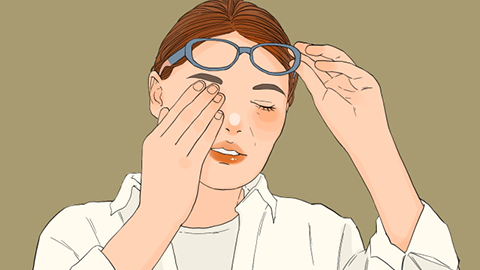
Myopia poses significant risks to ocular health. In general, myopia—particularly high myopia—is associated with thinning of the retina and choroid, posterior staphyloma, and even macular atrophy, degeneration, hemorrhage, or even retinal perforation. Other potential complications include subretinal neovascularization, retinal detachment, cataracts, and glaucoma. High myopia specifically increases the risk of retinal detachment, macular hemorrhage, macular degeneration, vitreous liquefaction and degeneration, and glaucoma. Moreover, the higher the degree of myopia, the greater the likelihood and severity of complications—including irreversible vision loss and even globe atrophy.

Patients are advised to maintain good ocular hygiene and avoid excessive visual strain. We hope this information is helpful to you.





