


How Are Stretch Marks Formed During Pregnancy?
Jul 08, 2022
Source: Cainiu Health

Dr. Liu Wan
Introduction
Stretch marks (striae gravidarum) are subcutaneous scar tissues that develop during pregnancy due to elevated hormonal levels, combined with skin stretching, increased fragility of elastic fibers in the skin, and excessive stretching leading to their rupture. They commonly appear on the inner thighs and the abdominal and lumbar regions. Once formed, stretch marks rarely resolve spontaneously; however, they may gradually fade over time and become less noticeable or nearly blend with the surrounding skin tone as a person ages.
Although some women routinely pay close attention to their overall health and skin care, stretch marks—often appearing on the thighs, abdomen, or buttocks—may still develop during pregnancy or weight gain. So, how do stretch marks form?
How Do Stretch Marks Form?
Stretch marks (striae gravidarum) result from elevated hormonal levels during pregnancy, combined with mechanical stretching of the skin, weakening and eventual rupture of elastic fibers in the dermis. This leads to the formation of subcutaneous scar tissue, typically appearing on the inner thighs and the waist and abdominal regions. Once formed, stretch marks rarely disappear spontaneously; however, they may gradually fade and become less noticeable—or even blend with the surrounding skin—over time as a person ages. While some individuals experience progressive lightening or even complete resolution, most do not see full disappearance. The development of stretch marks is largely unavoidable and poses no significant health risks.
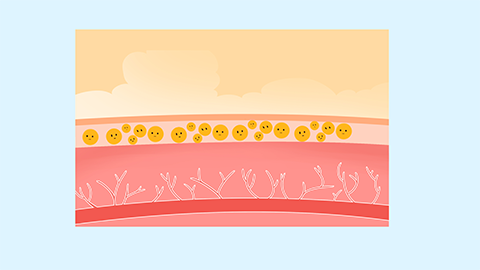
The occurrence of stretch marks correlates with several factors, including maternal age, genetic predisposition, family history, skin type, pre-pregnancy body weight, and weight gain during pregnancy. Initially, they appear as red or purple streaks that feel slightly raised and may cause mild itching—most commonly emerging during the later stages of pregnancy, when the abdomen rapidly expands.
Regular, moderate physical activity—such as walking or gentle strolling—is beneficial. When washing your feet, avoid excessively hot water; instead, use lukewarm water to gently rinse the abdominal area and perform light, circular massage on the abdominal skin. We hope this article has been helpful to you!






