


Can presbyopia and myopia cancel each other out?
Mar 23, 2022
Source: Cainiu Health

Dr. Cui Xin
Introduction
Generally speaking, presbyopia and myopia cannot cancel each other out. Myopia refers to a refractive condition in which, with the eye’s accommodative system at rest, parallel light rays entering the eye are focused by the ocular refractive system *in front of* the retina. Because the image formed on the retina is blurred, distance vision becomes impaired—i.e., distance visual acuity is reduced.
Presbyopia commonly occurs in older adults due to age-related decline in visual acuity and weakening of the visual nerves. Myopia significantly impairs vision, and when it substantially affects daily life and learning, visual correction becomes necessary. So, do presbyopia and myopia cancel each other out? Below, we address this question.
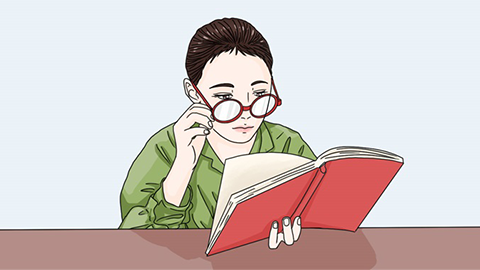
Do Presbyopia and Myopia Cancel Each Other Out?
Generally speaking, presbyopia and myopia do not offset one another. Myopia refers to a refractive error in which, with the eye’s accommodative system at rest, parallel light rays entering the eye are focused anterior to the retina after passing through the eye’s optical system. As a result, images formed on the retina are blurred, leading to reduced distance vision—i.e., difficulty seeing distant objects clearly.
Presbyopia, by contrast, is an age-related condition characterized by gradual hardening of the lens and progressive weakening of the ciliary muscle, resulting in diminished accommodative capacity of the eye. This physiological decline manifests as difficulty focusing on near objects and visual fatigue.
Presbyopia does not counteract myopia. Individuals with myopia will still develop presbyopia with advancing age, resulting in coexistence of both conditions. To see near objects clearly, they require reading (presbyopic) glasses; to see distant objects clearly, they need myopic corrective lenses. Patients are advised to frequently gaze into the distance during daily activities. Looking far away helps regulate the eye’s crystalline lens; thus, when myopia develops, gazing into the distance can help relax the ciliary muscle and alleviate eye strain.
We hope the above information is helpful to you.





