


What vitamins are lacking in hair loss?
Jul 14, 2022
Source: Cainiu Health

Dr. Liu Wan
Introduction
There are actually many causes of hair loss. Medically, hair shedding is considered a normal physiological process and is not classified as a hair loss disorder. However, when hair loss progresses to the extent that the scalp becomes visibly exposed—resulting in noticeable baldness—it is termed pathological hair loss. In healthy individuals, hair loss is often part of the natural hair metabolic cycle: a certain number of hairs are shed daily, while an equivalent number enter the growth phase, maintaining a dynamic, cyclical balance.
Hair loss refers to the normal shedding of hair, primarily occurring during the catagen (regression) and telogen (resting) phases of the hair growth cycle as part of natural follicular renewal. However, excessive hair loss is considered pathological and may stem from numerous underlying causes, necessitating comprehensive, individualized treatment approaches. So, which vitamins might be deficient in cases of hair loss?
Which vitamins are commonly associated with hair loss?
There are many potential causes of hair loss. Medically, hair shedding is generally regarded as a normal physiological process—not necessarily indicative of a hair-loss disorder. Only when hair loss progresses to the point of noticeable thinning, insufficient scalp coverage, or obvious balding does it qualify as pathological hair loss. In healthy individuals, hair undergoes continuous metabolic turnover: a certain number of hairs shed daily while an equivalent number enter the growth (anagen) phase, maintaining a dynamic equilibrium. However, because newly growing hairs are not readily visible, people often become anxious upon noticing increased shedding.
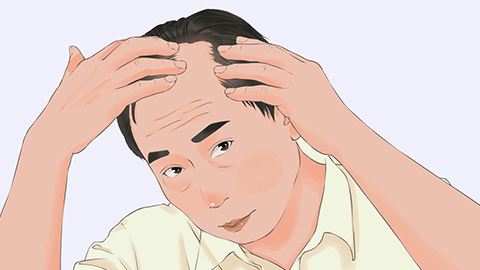
After hair loss occurs, identifying its cause requires careful evaluation—yet vitamin deficiency is not always the culprit. Healthy hair growth depends on a broad spectrum of nutrients, including various vitamins, trace minerals, proteins, and amino acids. Optimal hair health thus relies on balanced, multifaceted nutritional support—not merely the presence or absence of a single vitamin. Therefore, hair loss should not automatically be attributed to vitamin deficiency. A well-balanced diet is recommended to help prevent excessive shedding.

Additionally, certain hair care practices—such as frequent blow-drying, perming, dyeing, or overly vigorous scalp scrubbing during shampooing—may exacerbate hair loss. We hope this information proves helpful!





