


Causes of Hair Loss in Men
Jul 17, 2022
Source: Cainiu Health

Dr. Liu Wan
Introduction
For male hair loss, physiological causes should be considered first. The hair growth cycle occurs continuously and alternately every day. If this cyclical turnover is disrupted, the cycle shortens, leading to increased shedding or hair loss—termed physiological (or telogen) effluvium—which typically does not require specific treatment. Additionally, “ghost shaving”—also known as alopecia areata—is a condition in men characterized by the sudden appearance of well-defined, round, bald patches on the scalp.
In real life, many men experience hair loss to varying degrees—even severe cases may begin as early as adolescence. So, what causes male hair loss?
Causes of Male Hair Loss
The primary consideration for male hair loss is physiological. Hair undergoes a natural growth cycle daily, with phases of growth, transition, and shedding occurring continuously. If this cyclical process is disrupted—shortening the growth phase—it can lead to increased shedding and hair loss. This type of hair loss is termed “physiological” and typically does not require specific treatment. Another common condition is alopecia areata (colloquially known as “ghost shaving”), characterized by sudden, circular, patchy hair loss on the scalp. This condition is non-inflammatory, often reversible, but prone to recurrence—and is associated with dietary habits and psychological stress. Excess androgens can trigger folliculitis at the hair roots, leading gradually to follicular miniaturization and shrinkage. Concurrently, hair becomes dry, dull, lighter in color, and progressively thinner.
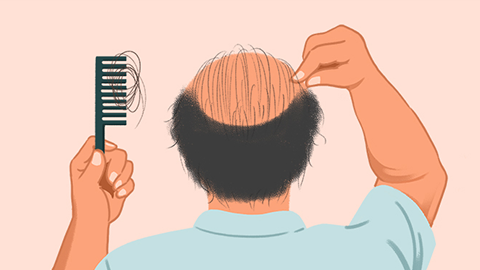
Hair loss may also stem from certain underlying medical conditions. For instance, individuals may experience noticeable hair shedding 1–3 months after a high fever, infection, surgery, thyroid dysfunction, or bacterial infection. Recovery requires restoring overall physiological balance, after which hair regrowth typically resumes gradually. Excessive sebum production leads to an oily, moist, and itchy scalp—creating an ideal environment for bacterial proliferation. Poor scalp hygiene can thus result in yellowish discoloration and accelerated hair loss.

Given the numerous potential causes of male hair loss, when pathological causes are ruled out, hair loss generally does not adversely affect overall health. We hope this information proves helpful to you!





