


Normal values of refractive power in children's eyes
Sep 02, 2022
Source: Cainiu Health

Dr. Xie Zixing
Introduction
Visual acuity is generally normal, reaching up to 1.0 before school age and exceeding 1.0 by age 6. Some children may have slightly lower vision compared to peers, but if their refractive status is within the normal range, their vision will develop normally with age. Visual function may develop somewhat slowly. In children with abnormal refractive errors, it may be difficult to achieve normal visual acuity later on. Whether doing homework or watching television, the duration should not be too long.
Vision problems are becoming increasingly severe, and the number of children with myopia is rising year by year—leaving many parents deeply regretful. Childhood vision issues have become one of society’s most pressing concerns. So, what are the normal refractive values for children’s eyes?
Normal Refractive Values for Children’s Eyes
By age 6, most children achieve visual acuity of 1.0 or better. Some children may have slightly lower visual acuity than their peers, yet still fall within the normal range of refractive error; their vision typically improves naturally with age. However, if visual function development is delayed or if a child has abnormal refractive error, achieving normal vision later in life may be difficult. Whether doing homework or watching television, prolonged near work should be avoided. It is advisable to take a short break every 30 minutes. Encourage your child to engage in physical activity and avoid excessive eye strain.
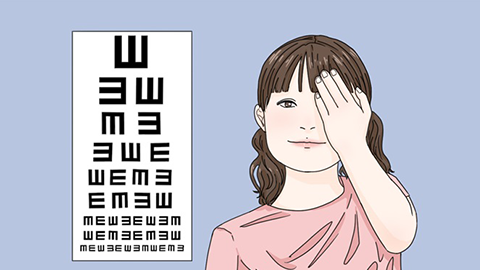
At birth, an infant’s eyeball is small and typically in a state of physiological hyperopia (farsightedness). As the child grows, the eyeball gradually enlarges, reaching near-adult size around age 6, at which point emmetropia (neither hyperopia nor myopia) is usually achieved. Emmetropic vision corresponds to a visual acuity of 1.0. Once children begin formal schooling and increase their time spent on near tasks such as reading, their eyes may start shifting toward myopia. Thus, visual development in childhood is a dynamic process—not one that reaches adult-level vision immediately.
Early childhood is a critical and sensitive period for visual development, requiring adequate intake of multiple essential nutrients. A diet rich in high-quality protein and vitamins serves as a protective factor for refractive development in preschool-aged children. We hope this information is helpful. Wishing you a joyful life and good health!



