


How to Differentiate Eczema and Neurodermatitis
Dec 23, 2024
Source: Cainiu Health

Dr. Liu Wenmin
Introduction
In general, eczema and neurodermatitis can be differentiated based on the affected areas, rash morphology, causes, symptom presentation, and disease progression. If abnormalities are present, prompt medical consultation is recommended. During treatment, eczema should be treated locally as directed by a physician, using medications such as prednisone acetate cream, desonide cream, ketoconazole cream, etc.
Generally, eczema and neurodermatitis can be differentiated according to the affected body regions, rash morphology, causes, symptom presentation, and disease progression. If abnormalities are present, prompt medical consultation is recommended. Detailed analysis is as follows:
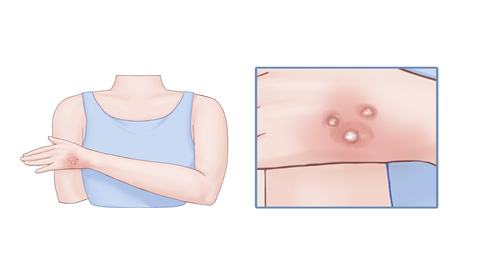
1. Affected Areas: Eczema can occur all over the body, including the scalp, trunk, limbs, armpits, and groin. Neurodermatitis, however, more commonly affects sensitive or easily irritated areas such as the eyelids, neck, limbs, waist, and sacral region.
2. Rash Morphology: In its early stages, eczema typically presents with erythema, papules, vesicles, and exudation; later stages may develop into crusting, scaling, and skin thickening. Neurodermatitis mainly presents with thickened, proliferative skin and scaling, forming lichenification, accompanied by significant pruritus.
3. Causes: Eczema is usually caused by allergies or other external irritants, such as contact allergens or inhaled irritants. Neurodermatitis is closely related to psychological factors such as mental stress, emotional fluctuations, anxiety, and depression. Additionally, external friction may also trigger or exacerbate neurodermatitis.
4. Symptom Presentation: Symptoms of eczema include redness, swelling, itching, and vesicles, with severe cases possibly presenting erosion and exudation. Neurodermatitis mainly presents with itching, tightness, burning sensation, and small granular rashes. As the condition progresses, the rashes may gradually thicken, forming lichenified plaques.
5. Disease Progression: Eczema may present acutely or become chronic, often recurring. Neurodermatitis usually presents as a chronic condition, potentially lasting months or even years, and tends to relapse.
In treatment, eczema requires topical application of medications such as prednisone cream, desonide cream, or ketoconazole cream, as directed by a physician. Neurodermatitis can be treated symptomatically with topical medications such as mometasone furoate cream, fluticasone propionate cream, or hydrocortisone butyrate cream, as directed by a physician.





