


Is a stye the same as conjunctivitis?
Nov 19, 2025
Source: Cainiu Health

Dr. Liu Wenmin
Introduction
A stye is not conjunctivitis; the two conditions differ significantly in terms of affected site, underlying cause, and clinical presentation, and must be accurately differentiated based on specific characteristics. In daily life, maintaining good eye hygiene and avoiding rubbing the eyes can effectively reduce the risk of both eye conditions. Accurate differentiation is essential for appropriate management.
Stye is not conjunctivitis; the two conditions differ significantly in terms of affected site, cause, and clinical presentation, and should be accurately differentiated based on specific characteristics.
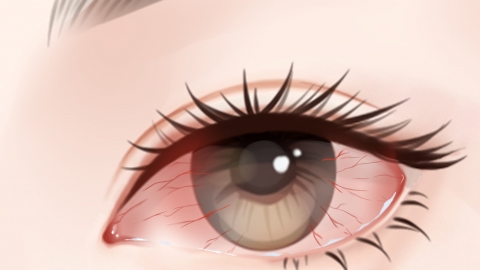
A stye is an acute, purulent inflammation of the eyelid glands, most commonly caused by Staphylococcus infection. Conjunctivitis, on the other hand, is an inflammation of the conjunctival tissue, with more complex etiologies including bacterial or viral infections, allergic reactions, and environmental irritants. It primarily affects the conjunctiva—the membrane covering the surface of the eyeball and inner eyelid. The difference between the two can be clearly distinguished by their location: one involves the eyelid glands, while the other affects the conjunctival tissue.
In terms of symptoms, a stye typically presents with localized redness, swelling, and pain in the eyelid. As the condition progresses, a yellow pus point may appear, with pain localized to the affected area of the eyelid. Conjunctivitis mainly manifests as conjunctival congestion, increased eye discharge, and is often accompanied by foreign body sensation, itching, discomfort, or photophobia—symptoms primarily located on the surface of the eye.
In daily life, maintaining good eye hygiene and avoiding rubbing the eyes can effectively reduce the risk of both eye conditions. Accurate differentiation is essential for appropriate management and treatment.



