


What should I do if I feel discomfort with my knee in full extension?
Sep 05, 2026
Source: Cainiu Health

Dr. Chen Jian
Introduction
Discomfort in the fully extended position of the knee joint can be improved through measures such as adjusting daily joint loading patterns, undergoing localized physical therapy, performing standardized joint rehabilitation exercises, using medications for symptomatic relief, and implementing appropriate joint protection and maintenance. If symptoms such as locking or “catching” of the knee joint in extension, severe pain upon standing, or inability to bear weight occur, prompt medical evaluation and treatment at a hospital are recommended.
Discomfort experienced when the knee joint is fully extended can be improved through various approaches, including adjusting daily joint loading patterns, undergoing localized physical therapy, performing standardized joint rehabilitation exercises, using medications for symptomatic relief, and implementing proper joint protection and care. If symptoms such as knee locking or “catching” during extension, severe pain upon standing, or inability to bear weight occur, prompt medical evaluation and treatment at a hospital are recommended.
1. Adjust daily joint loading: Minimize prolonged periods in full knee extension—avoid extended standing or rigid, static standing with locked knees. Periodically alternate between gentle knee flexion and relaxation to reduce sustained tension on the synovial membrane and ligaments, thereby alleviating the dull ache or discomfort associated with full extension.
2. Perform localized physical therapy: Apply heat therapy or infrared treatment to the tissues surrounding the knee joint to enhance local blood circulation. This helps relax tightened or contracted ligaments and muscles, resolve mild inflammatory accumulations, and alleviate stiffness and subtle pain experienced during full knee extension.
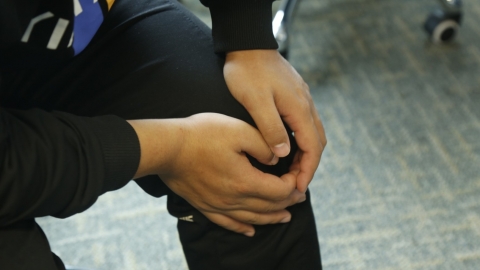
3. Follow standardized joint rehabilitation training: Engage in gentle knee-flexion stretching and quadriceps-relaxation exercises to balance muscular tension around the knee joint. Gradually stretch periarticular soft tissues to improve overall flexion–extension range of motion and correct tissue-tension-related discomfort during full extension.
4. Use medications for targeted symptom relief: When low-grade inflammation manifests as dull, aching pain, topical anti-inflammatory and soothing agents may be applied to improve the local condition. These help reduce mild soft-tissue inflammation and relieve traction-related pain during knee extension. Always adhere to prescribed dosages to avoid adverse systemic reactions.
5. Implement joint protection and maintenance: Wear lightweight, supportive knee braces during daily activities to stabilize the joint and prevent exposure to cold or excessive mechanical stress. Avoid sudden, forceful hyperextension or “locking” maneuvers that may destabilize the joint; maintaining soft-tissue stability helps prevent recurrence of symptoms.
Maintain moderate lower-limb activity in daily life to prevent joint stiffness caused by prolonged sedentary behavior. Pay attention to knee warmth, regularly strengthen core leg muscles, and progressively improve joint structural stability—thereby gradually alleviating abnormal discomfort during knee extension.




