


How Can Acne Scars Be Removed?
May 30, 2022
Source: Cainiu Health

Dr. Liu Wan
Introduction
Acne may leave behind post-acne marks. Some superficial marks may fade gradually and eventually disappear without specific treatment, as the skin undergoes natural turnover—though this process can take a relatively long time. However, certain marks are more persistent and require medical intervention. Post-acne marks generally fall into three categories: hyperpigmented (brown/black) marks, erythematous (red) marks, and atrophic (depressed) scars.
In today’s society, many adolescents develop acne on their faces. After the acne clears, post-acne marks (or “acne scars”) often remain, significantly affecting facial appearance.
How Can Post-Acne Marks Be Removed?
Acne may leave behind various types of post-inflammatory marks. Mild marks often require no specific treatment and gradually fade as the skin undergoes natural turnover—though this process may take a considerable amount of time. More persistent marks, however, necessitate medical intervention. Common types include hyperpigmented (dark) marks, erythematous (red) marks, atrophic (depressed) scars, and hypertrophic (raised) scars. Treatment strategies vary depending on the specific type of mark.
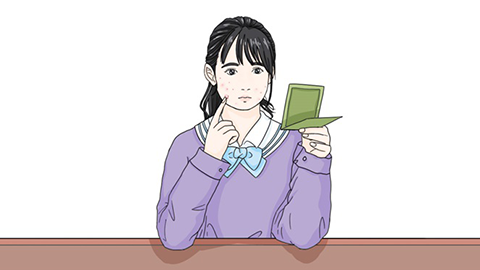
Hyperpigmented (dark) marks result from post-inflammatory melanin deposition following acne inflammation. They represent temporary, pseudo-scars—not true scars—and may resolve spontaneously over time. Under medical supervision, oral vitamin C supplementation combined with topical azelaic acid cream may be recommended for treatment. In contrast, when severe inflammatory acne damages collagen in the dermis, dermal collapse can occur, leading to atrophic (pitted) scars. Many adolescents habitually squeeze or pick at their acne lesions; improper squeezing greatly increases the risk of suppuration and infection, thereby raising the likelihood of developing pitted scarring.

Daily facial care is essential. When outdoors, sun protection is critical—wear sunscreen or use physical barriers such as hats or umbrellas. We hope this information proves helpful!



