


What should I do if a wound becomes inflamed and discharges pus?
Dec 23, 2024
Source: Cainiu Health

Dr. Wang Lei
Introduction
The closure status of a wound can also affect its risk of infection. If a wound is sutured too tightly or too loosely, or if the dressing is applied improperly, it may impair blood circulation and healing of the wound, thereby increasing the risk of infection and leading to suppuration. If the wound is not adequately closed, it may require resuturing or re-dressing to ensure proper closure and blood circulation.
Generally, wound inflammation and suppuration may be caused by improper wound care, poor wound closure, superficial skin infection, cellulitis, or necrotizing fasciitis. General treatment and medication therapy can be employed to improve the condition. Prompt medical attention is necessary, and treatment should follow medical advice. Details are as follows:
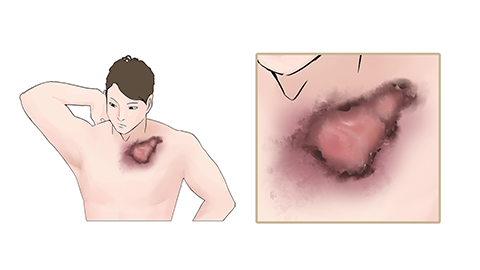
1. Improper wound care: If the wound is not properly managed, such as inadequate cleaning, contact with unclean objects, or failure to replace dressings regularly, bacteria may be introduced and multiply at the wound site, triggering an inflammatory response and resulting in suppuration. The wound can be repeatedly irrigated with antiseptics such as povidone-iodine, hydrogen peroxide, or normal saline to ensure thorough removal of pus and necrotic tissue.
2. Poor wound closure: The closure status of a wound can influence the risk of infection. If a wound is sutured too tightly or loosely, or improperly dressed, it may impair blood circulation and healing, increasing the risk of infection and suppuration. If wound closure is inadequate, resuturing or re-dressing may be required to ensure proper closure and blood circulation.
3. Superficial skin infection: Superficial skin infections are caused by bacteria such as Staphylococcus aureus. Bacteria can enter the wound through skin breaches and multiply, causing an inflammatory response and suppuration, often accompanied by redness and swelling around the wound. As advised by a physician, topical antibiotics such as erythromycin ointment, mupirocin ointment, or fusidic acid cream can be used to eliminate bacteria and promote wound healing.
4. Cellulitis: Cellulitis is an acute, diffuse, suppurative infection of the subcutaneous tissue, beneath the fascia, within muscle spaces, or in deep loose connective tissue caused by bacterial infection. Bacteria can enter the wound through skin breaches and multiply, triggering an inflammatory response and suppuration, often accompanied by high fever. Under medical guidance, medications such as ibuprofen sustained-release capsules, prednisone acetate tablets, or paracetamol tablets can be used to kill bacteria and relieve pain.
5. Necrotizing fasciitis: Necrotizing fasciitis is an acute suppurative infection caused by mixed bacterial infections. Its hallmark is rapid lesion progression leading to extensive necrosis of subcutaneous tissue and fascia. Bacteria enter the wound through skin breaches and multiply, triggering an inflammatory response and suppuration, often accompanied by chills. Medications such as metronidazole tablets, azithromycin hydrochloride injection, or potassium penicillin injection may be used under medical guidance to kill bacteria and control infection.
In treatment, infection should be controlled, wound healing promoted, and the patient's health restored.




