


How to Treat Burn Blisters
Apr 20, 2022
Source: Cainiu Health

Dr. Gan Liqiang
Introduction
Following a localized skin burn, increased vascular permeability causes plasma to leak from blood vessels into the interstitial space or beneath the epidermis, resulting in blister formation. If blisters develop after a localized skin burn, the wound should first be disinfected with povidone-iodine. Subsequently, the blister may be aspirated using a sterile needle attached to a syringe, or drained via an incision at the blister’s dependent margin. After drainage, it is advisable to retain the overlying blister roof, as it serves a protective function.
Many individuals experience burns, which often result in blister formation. Appropriate management is essential at this stage; otherwise, the burn injury may worsen. So, how should burn blisters be managed?
Management of Burn Blisters
Following localized skin burns, increased vascular permeability causes plasma to leak from blood vessels into the interstitial space or beneath the epidermis, resulting in blister formation. If blisters develop after a localized burn, the wound should first be disinfected with povidone-iodine. Subsequently, the blister fluid may be carefully aspirated using a sterile needle (e.g., from a sterile syringe) or drained via a small incision at the blister’s base. After drainage, it is advisable to retain the overlying blister roof, as it serves a protective function for the underlying tissue.
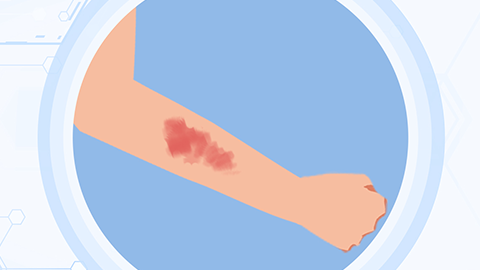
After wound debridement, topical antimicrobial ointments—such as Mupirocin (Bactroban®) or silver-zinc ointment—may be applied. Alternatively, epidermal growth factor preparations—including recombinant human epidermal growth factor (e.g., Jin Yin Pei®) or bFGF (e.g., Bei Fu Ji®)—can be used to promote wound healing. Dressings should be changed daily or every other day, depending on wound condition. If the burn involves a limb, the affected area should be elevated whenever possible to minimize edema and pain; dependent positioning should be avoided.

Post-burn care requires diligent local wound management. The wound must remain dry to prevent infection. In addition, patients should avoid spicy or otherwise irritating foods. Instead, they should consume fresh fruits and vegetables rich in vitamins and drink ample warm water to facilitate systemic detoxification. Close monitoring of the burn site is essential; if signs of secondary infection (e.g., increased redness, swelling, warmth, purulent discharge, or fever) appear, prompt medical evaluation is required. We hope this information proves helpful!





