


Differences Between Herpes and Hand, Foot, and Mouth Disease
Apr 24, 2022
Source: Cainiu Health

Dr. Gan Liqiang
Introduction
The primary distinction between herpes and hand-foot-and-mouth disease lies in the presence or absence of rashes or vesicles on the palms, soles, and buttocks. Herpes and hand-foot-and-mouth disease share very similar symptoms: both commonly present with fever at onset, although some children may have normal body temperature. In herpes, lesions are typically confined to the oral cavity—appearing as vesicles or, in some cases, ulcers.
Herpes and hand-foot-and-mouth disease (HFMD) are distinct conditions. So, what are the differences between herpes and HFMD-related vesicles?
Differences Between Herpes and Hand-Foot-and-Mouth Disease
The primary distinction between herpes and HFMD lies in the presence or absence of rashes and vesicles on the palms, soles, and buttocks. Both conditions share similar early symptoms—fever is common at onset, although some children may have normal body temperature. In herpes, lesions are typically confined to the oral cavity, presenting as vesicles or, in some cases, ulcers. In contrast, children with HFMD exhibit not only fever and oral vesicles but also scattered rashes and vesicles on the hands, feet, and buttocks; occasionally, these lesions may extend to the trunk. Importantly, such rashes do not leave scars or pigmentary changes.
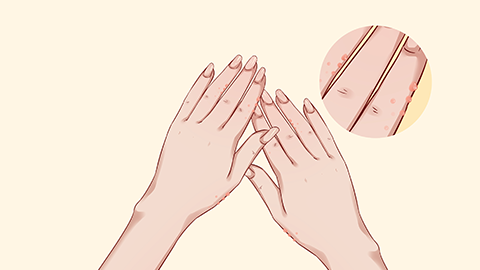
Both herpes and HFMD are common pediatric illnesses. Herpes is caused by infection with the herpes simplex virus (HSV), with the hallmark symptom being oral vesicles. HFMD, however, results from enterovirus infection and is characterized by red papules and vesicles on the hands, feet, and mouth. Given their differing pathogenic mechanisms, treatment strategies for herpes and HFMD also differ. Therefore, when a child falls ill, prompt medical evaluation is essential to confirm the diagnosis before initiating appropriate therapy.

During illness, dietary adjustments are important for both conditions—meals should be light and easily digestible. We hope this information is helpful. Wishing you good health and happiness!








