


What causes testicular swelling and pain?
Apr 28, 2022
Source: Cainiu Health

Dr. Pan Yongyuan
Introduction
Scrotal pain may arise from several causes: one category originates from the scrotum itself, while another stems from structures outside the scrotum. Pain localized to the scrotum does not necessarily indicate a scrotal disorder, and pain perceived in the testis is not always due to testicular pathology. In addition, inflammation of the vas deferens can also cause scrotal pain. Furthermore, trauma to the testis or epididymis—both located within the scrotum—represents another potential cause.
The term “testicular pain” is, in fact, medically referred to as “scrotal pain,” since the testes reside within the scrotum. Pain in this region may originate from any structure located within the scrotum—including the testes themselves, the epididymis, the vas deferens, or the tunica vaginalis (the membranous sac surrounding the testis). So, what causes a sensation of swelling and pain in the testicles?
What Causes Swelling and Pain in the Testicles?
Scrotal pain can arise from several distinct causes—some originating directly within the scrotum, others stemming from structures outside it. Importantly, pain localized to the scrotum does not necessarily indicate a scrotal pathology, nor does testicular pain always signify a primary testicular disorder. For instance, orchitis (inflammation of the testis) can cause severe pain; however, true orchitis is relatively rare. Why? Because when orchitis does occur, the associated pain is typically excruciating—often unbearable—and may even lead to shock. In contrast, most cases of testicular pain are actually due to epididymitis—the inflammation of the epididymis, the coiled tube adjacent to and connected with the testis. During epididymitis, the testis often becomes swollen, red, warm to the touch, and exquisitely tender. This condition—termed epididymo-orchitis—commonly presents with testicular pain. Another potential cause is testicular torsion: imagine the testis as an egg suspended by a stalk (the spermatic cord); if the testis rotates, this stalk becomes twisted, compromising blood flow and leading to ischemia. Consequently, the testis may become painful and, if untreated, progress to infarction and necrosis.
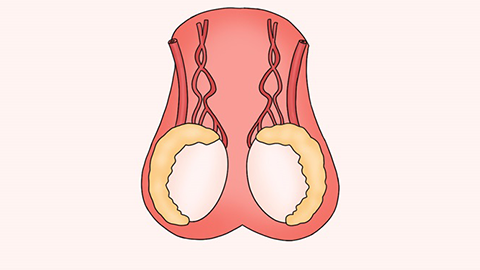
In addition, inflammation of the vas deferens may also produce scrotal pain. Trauma to the testis or epididymis represents another intra-scrotal cause. Conversely, extra-scrotal conditions may refer pain to the scrotum—for example, prostatitis. Although the inflammatory process resides in the prostate gland, patients frequently experience referred pain in the scrotum—a phenomenon sometimes colloquially termed “attacking east while aiming west” (i.e., “prostatic pain”).
Thus, testicular pain may, in fact, be a manifestation of prostatitis or chronic prostatic pain syndrome. As such, diagnosing the underlying cause is complex. Accurately distinguishing between intra-scrotal and extra-scrotal etiologies is essential for establishing the correct diagnosis and guiding appropriate treatment. We hope this explanation has been helpful. Wishing you optimal health and happiness in life.








