


Can liver cancer be detected by ultrasound (B-mode ultrasound)?
Jun 01, 2022
Source: Cainiu Health

Dr. Jin Zhongkui
Introduction
Hepatocellular carcinoma (HCC) can be diagnosed effectively using B-mode ultrasound, which is highly characteristic. Ultrasound enables early and sensitive detection of suspicious space-occupying lesions within the liver and helps differentiate between cystic and solid lesions. It also allows assessment of the liver and abdomen for additional metastatic lesions. Contrast-enhanced ultrasound (CEUS) can detect small HCCs. If necessary, further evaluation with contrast-enhanced abdominal MRI or contrast-enhanced abdominal CT may be required.
B-mode ultrasonography (B-ultrasound) is currently the most common imaging modality for evaluating the abdomen and is highly convenient for detecting a wide range of abnormalities. So, can hepatocellular carcinoma (HCC) be detected by B-ultrasound?
Can hepatocellular carcinoma be detected by B-ultrasound?
Yes, HCC can be diagnosed using B-ultrasound—and quite reliably. B-ultrasound enables early, sensitive detection of suspicious space-occupying lesions within the liver and helps differentiate cystic from solid lesions. It also allows assessment of potential metastatic lesions in the liver or elsewhere in the abdomen. Contrast-enhanced ultrasound (CEUS) can detect small (micro-) HCCs. If necessary, further evaluation with contrast-enhanced abdominal MRI or contrast-enhanced abdominal CT may be warranted. These contrast-based modalities provide superior visualization of tumor location, number, size, and relationships to adjacent organs and critical vessels—information essential for guiding appropriate clinical management.
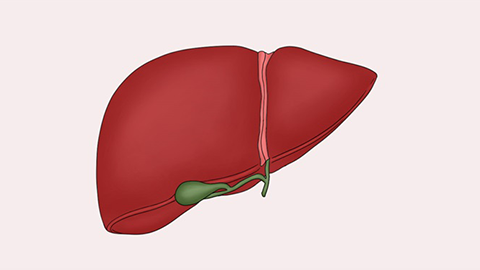
B-mode ultrasound is a widely used clinical imaging tool that clearly delineates the contours, cross-sectional shapes, gross internal architecture, spatial relationships, and dynamic motion of visceral soft tissues. It offers excellent intuitiveness, high reproducibility, and strong three-dimensional perception. As a non-invasive diagnostic technique, it enjoys broad clinical application and can clearly visualize intra-abdominal space-occupying lesions.
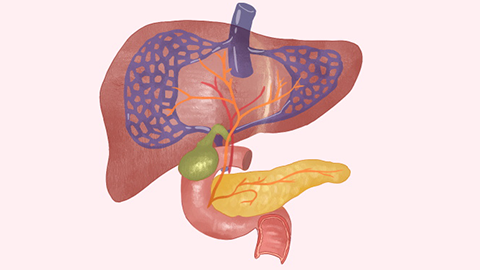
In daily life, preventing recurrence of liver disease—especially alcohol-related liver disease and drug-induced liver injury—is crucial. Vaccination against hepatitis B is also strongly recommended. We hope this information proves helpful to you!



