


Can hypertrophic scars be cured?
Jan 24, 2025
Source: Cainiu Health

Dr. Liu Wenmin
Introduction
Scar hyperplasia is mainly the result of excessive repair of fibrous tissue after the body sustains trauma. It can lead to raised areas and dark red swellings on the skin surface. For mild cases of scar hyperplasia, it is recommended to maintain proper skincare and, as directed by a physician, use medications such as scar removal ointments or topical creams like asiaticoside ointment. These treatments can help inhibit scar tissue proliferation and achieve effects of reducing and curing the scar.
Generally speaking, scars refer to cicatrix. Whether cicatrix hyperplasia can be cured depends on the specific situation. If the cicatrix hyperplasia is mild, it can usually be cured; however, if it is severe, a complete cure might not be possible. Detailed analysis is as follows:
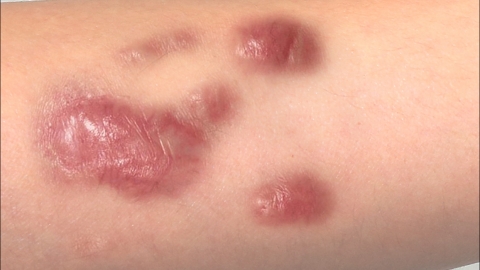
Cicatrix hyperplasia mainly results from excessive tissue repair after trauma, leading to raised, dark red swellings on the skin surface. For mild cases of cicatrix hyperplasia, it is recommended to maintain proper skincare and, under medical guidance, use topical medications such as scar removal ointments or septilin cream, which can inhibit scar tissue proliferation and help fade and cure the scars.
If the cicatrix hyperplasia is severe, involving a large area, deep tissue damage, or occurs in individuals with a predisposition to scarring, a complete cure might not be achievable. In such cases, laser therapy can be used for improvement. The thermal energy generated by the laser accelerates epidermal cell metabolism and promotes collagen proliferation, thereby aiding in scar fading.
In daily life, excessive sun exposure should be avoided to prevent ultraviolet damage to the skin. Also, avoid consuming spicy, irritating foods and allergenic foods such as seafood and mangoes. It is recommended to eat more fresh fruits and vegetables rich in vitamins C and E to promote skin cell repair and regeneration.



