


What causes hard tissue to grow under the toenail, and what should be done about it?
Dec 01, 2025
Source: Cainiu Health

Dr. Li Feng
Introduction
Hard tissue growing under the toenail may result from prolonged pressure and friction, improper nail trimming, subungual warts, ingrown toenails with granulation tissue proliferation, or subungual exostosis. Management options include daily care, medication, or surgical treatment depending on the specific condition. It is important to wear properly fitting shoes and socks to avoid compression and friction on the toes, and to develop proper nail-cutting habits to prevent nail injury.
Hard tissue growing under the toenail may be caused by long-term pressure and friction, improper trimming, subungual warts, ingrown toenails with granulation tissue proliferation, or subungual exostosis. Depending on the specific cause, improvements can be made through daily care, medication, or surgical treatment. Detailed analysis is as follows:
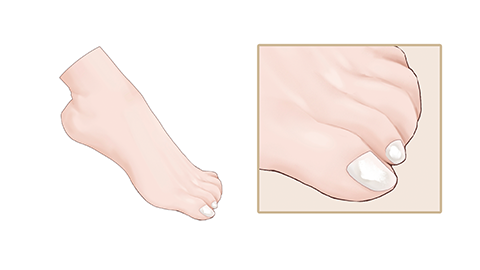
1. Long-term pressure and friction
Wearing tight shoes or high heels frequently causes prolonged pressure and friction on the toes, leading to thickening of the epidermis under the nail and formation of hard tissue. Switch to loose, breathable flat shoes, avoid walking for extended periods, soak feet in warm water every night to soften the keratinized layer, and gently massage the toes to improve circulation.
2. Improper trimming
Cutting the nails too short or unevenly along the edges can irritate the tissue beneath the nail, causing abnormal keratinocyte proliferation. When trimming, leave an appropriate length and cut the edges straight across, avoiding deep trimming around the nail folds.
3. Subungual wart
Infection of the skin beneath the nail by human papillomavirus (HPV) leads to excessive proliferation of keratinocytes, forming rough, hard growths. Under medical guidance, topical treatments such as imiquimod cream or fluorouracil ointment may be used, along with intralesional injections of pingyangmycin. Laser ablation or surgical removal may also be performed to eliminate the wart.
4. Ingrown toenail with granulation tissue proliferation
The lateral edge of the nail grows into the nail groove, causing chronic irritation and inflammation, which over time leads to hardened granulation tissue. Follow medical advice to apply mupirocin ointment or fusidic acid cream topically, take cefuroxime axetil tablets orally, and in severe cases undergo radical surgery for ingrown toenails, including partial nail matrix excision.
5. Subungual exostosis (bone spur)
Localized bony overgrowth of the toe bone forms a bony spur that elevates the tissue beneath the nail, resulting in a hard sensation and often accompanied by nail deformity. Medical evaluation with X-ray imaging is required for diagnosis. For mild symptoms, wear soft-soled shoes to reduce pressure; for severe cases, surgical removal of the subungual exostosis may be necessary, followed by measures to avoid weight-bearing on the affected toe during recovery.
In daily life, choose well-fitting shoes and socks to prevent compression and friction on the toes; develop proper nail-trimming habits to avoid injury; promptly address any foot abnormalities and avoid picking or digging at them; seek early medical evaluation if the hard tissue continues to grow or becomes painful to ensure accurate diagnosis and treatment.



