


What Is Seborrheic Dermatitis-Related Hair Loss?
Dec 27, 2021
Source: Cainiu Health

Dr. Liu Wan
Introduction
Seborrheic dermatitis and seborrheic alopecia are two distinct conditions; however, seborrheic alopecia is often accompanied by seborrheic dermatitis. Seborrheic alopecia results from excessive sebum production by the scalp, leading to follicular damage or atrophy and impairing the ability to regenerate new hair. Additionally, the overproduction of sebum creates a favorable environment for bacterial proliferation, which may contribute to the development of seborrheic dermatitis.
Hair loss refers to the phenomenon of hair shedding. Normally shed hairs are those in the catagen (regression) and telogen (resting) phases. As hairs continuously cycle between the catagen phase and the newly initiated anagen (growth) phase, a dynamic equilibrium is maintained—thus preserving normal hair density. Pathological hair loss, however, denotes abnormal or excessive shedding, with numerous potential underlying causes. Below, we address the specific question: What is seborrheic dermatitis-related hair loss?
What Is Seborrheic Dermatitis-Related Hair Loss?
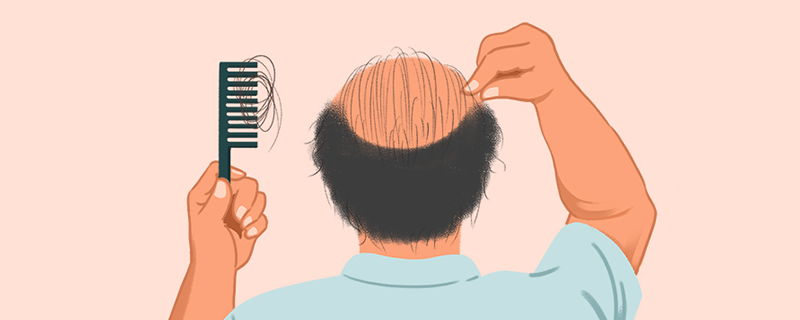
Seborrheic dermatitis and seborrheic alopecia are two distinct conditions; however, seborrheic alopecia frequently co-occurs with seborrheic dermatitis. Seborrheic alopecia results from excessive sebum production by the scalp, leading to follicular damage or atrophy and impairing the ability to generate new hair. Moreover, excessive sebum creates an environment conducive to bacterial proliferation, potentially triggering seborrheic dermatitis. Seborrheic alopecia is often accompanied by increased dandruff, scalp pruritus (itching), and other symptoms. Initially, hair thinning appears on the vertex (crown) or frontal area (forehead); eventually, hair may be lost entirely except for residual growth in the occipital region and bilateral temporal areas.
Knowledge Extension: Treatment of Seborrheic Alopecia
Dietary modifications can serve as a foundational approach, since this type of hair loss is primarily driven by excessive scalp sebum secretion. Accordingly, consumption of greasy and fried foods should be minimized. Regular physical exercise is recommended to enhance systemic circulation and overall physical fitness. Scalp massage during leisure time may also help alleviate hair loss symptoms. Topical application of Qiaoran Tang Anti-Hair Loss & Hair Growth Solution may provide supportive daily care for individuals experiencing hair shedding or thinning. This product is also suitable for individuals without active hair loss; regular use may promote hair growth and reduce both shedding and breakage.
The above outlines the key aspects of this condition. We hope this information proves helpful to you.




