


Can Rehmannia glutinosa be replaced with mulberry fruit?
Apr 15, 2025
Source: Cainiu Health

Dr. Zhang Xiuhong
Introduction
Although both Rehmannia glutinosa (Shu Di Huang) and mulberry fruit (Sang Zhen) are traditional Chinese medicines and share certain similar therapeutic effects, they differ in their medicinal properties and primary indications. When a patient presents with kidney essence deficiency, the effects of Shu Di Huang in nourishing essence and marrow, and greatly replenishing yin and blood, are irreplaceable. In comparison, mulberry fruit has weaker nourishing effects and lacks the "marrow-enriching" property of Shu Di Huang, thus being unable to address the deeper issues of essence and blood deficiency.
Shu Di Huang (processed Rehmannia root) generally cannot be substituted with mulberry fruit. It is recommended to use medications under the guidance of a physician.
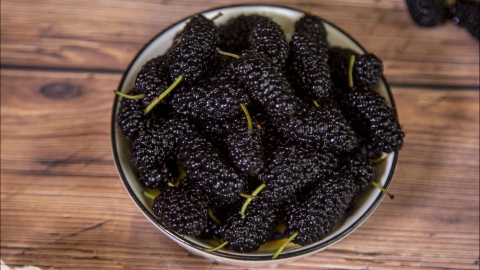
Although both Shu Di Huang and mulberry fruit are traditional Chinese medicines with some similar effects, they differ in their medicinal properties and primary therapeutic applications. When patients suffer from kidney essence deficiency, the effects of Shu Di Huang in nourishing essence and marrow and replenishing yin and blood cannot be replaced. Mulberry fruit has weaker nourishing properties and lacks the "marrow-enriching" characteristic of Shu Di Huang, thus being unable to address deeper issues of essence and blood deficiency. Moreover, for individuals with yang deficiency constitution or spleen-stomach cold deficiency, substituting Shu Di Huang with mulberry fruit may exacerbate symptoms of cold-dampness.
Shu Di Huang is more suitable for patients needing comprehensive body regulation and improvement of various blood-deficiency symptoms. Mulberry fruit is more appropriate for individuals needing nutritional supplementation or improvement of vascular sclerosis. In terms of herbal compatibility, Shu Di Huang can be combined more widely and flexibly with other herbs, forming various effective prescriptions. Although mulberry fruit can also be used in combination with other herbs, its applications and compatibility contraindications are relatively more specific.
In daily life, maintaining a balanced diet and healthy lifestyle habits can contribute to overall health.


