


How thick does the endometrium need to be for menstruation to occur?
Jul 11, 2025
Source: Cainiu Health

Dr. Zhang Lu
Introduction
Under normal circumstances, menstruation typically occurs when the endometrial thickness is approximately 10 to 12 mm. If the endometrial thickness exceeds 12 mm significantly and menstruation does not occur for a prolonged period, one should be cautious about conditions such as endometrial hyperplasia and should seek medical examination promptly. It's also important to pay attention to changes in the menstrual cycle and menstrual flow. If abnormal bleeding or prolonged menstruation occurs, the underlying causes should be investigated as soon as possible to ensure reproductive health.
Generally, endometrial thickness is about 10~12mm when menstruation occurs. Detailed analysis is as follows:
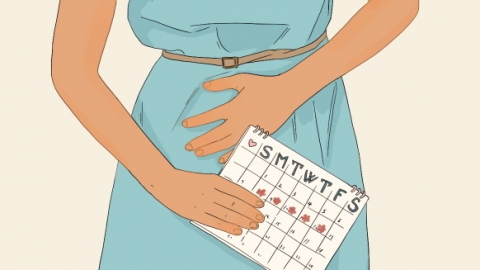
Menstruation occurring when the endometrial thickness reaches approximately 10mm is commonly seen in women of advanced age or with declining ovarian function. In these women, the ovaries produce relatively lower levels of estrogen, which limits endometrial proliferation. When the endometrium thickens to around 10mm, hormonal levels fluctuate, and withdrawal of progesterone leads to endometrial shedding. Additionally, long-term mental stress and irregular lifestyle habits may affect endocrine balance and slow endometrial proliferation, also potentially resulting in menstruation at a thickness of 10mm.
Menstruation occurring when the endometrial thickness reaches 12mm typically occurs in women of reproductive age. Women in this stage usually have strong ovarian function and sufficient estrogen secretion, which continuously acts on the endometrium, allowing it to proliferate fully to about 12mm. Moreover, if a woman has recently experienced good nutrition and active metabolism, providing sufficient nutritional support for endometrial growth, the endometrium may also shed and menstruation occur when it reaches a relatively thick 12mm.
If the endometrial thickness significantly exceeds 12mm and menstruation is absent for a prolonged period, conditions such as endometrial hyperplasia should be considered, and timely medical evaluation is necessary. It is important to monitor menstrual cycles and flow regularly. If abnormal bleeding or prolonged menstruation occurs, prompt investigation of the underlying cause is required to ensure reproductive health.



