


How many days after menstruation ends is the ovulation period?
Jul 03, 2022
Source: Cainiu Health

Dr. Lv Aiming
Introduction
Since each woman’s menstrual cycle varies, the timing of ovulation after menstruation also differs. You can calculate your ovulation window based on your individual menstrual cycle using a formula. For women with regular cycles, ovulation typically occurs 14 days before the first day of the next menstrual period. The fertile window—commonly referred to as the “ovulation period”—spans 10 days: five days before ovulation and four days after.
A woman typically releases only one mature egg per month. If this egg is fertilized by sperm during this time, conception may occur. If conception does not happen this month, the opportunity must be awaited until the following month. Therefore, women planning pregnancy often wish to identify their ovulation period. So, how many days after menstruation ends does ovulation occur?
How Many Days After Menstruation Ends Does Ovulation Occur?
Since menstrual cycles vary among individuals, the timing of ovulation after menstruation also differs. Women can estimate their ovulation day using a simple calculation based on their personal cycle length. For women with regular cycles, ovulation generally occurs 14 days before the first day of the next menstrual period. The fertile window—the “ovulation period”—spans five days before ovulation and four days after, totaling ten days. Women with irregular cycles cannot rely on the above formula alone. Instead, they may determine their shortest and longest recent menstrual cycle lengths and apply the following calculation: subtract 18 days from the shortest cycle length and 11 days from the longest cycle length. Counting forward from the first day of the current menstrual period, this yields the approximate start and end dates of the fertile window.
Because individual menstrual cycles vary, calculations using the above formulas may yield slight inaccuracies. Moreover, even women with regular periods may occasionally experience anovulatory cycles (i.e., no ovulation). Thus, for more reliable confirmation of ovulation, ovulation predictor kits (OPKs) offer a simple and convenient method. Testing typically begins on the third day after menstruation ends, and daily testing with OPKs is essential. When the test line (second red line) appears as dark as—or darker than—the control line (first red line), ovulation is likely to occur within the next 24–48 hours. Since sperm can survive in the female reproductive tract for several days, intercourse during the three days before ovulation and the three days after offers the highest chance of conception.
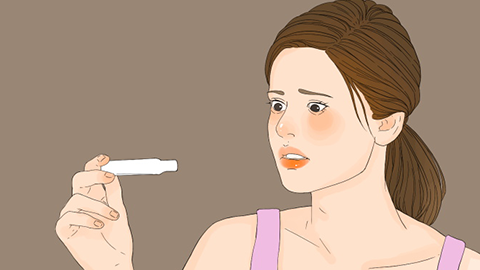
Women are advised to rest adequately during the ovulation period and avoid strenuous physical activity or abdominal trauma. We hope this information proves helpful.




