


On which day after menstruation ends does ovulation occur?
Jul 15, 2022
Source: Cainiu Health

Dr. Chen Zhe
Introduction
It is relatively difficult to determine exactly which day after menstruation ends ovulation occurs in women. Menstrual cycles vary among individuals, and the duration of menstrual bleeding also differs from person to person. Generally speaking, assuming a 28-day menstrual cycle, ovulation occurs on day 14 before the onset of the next menstrual period. Thus, if menstruation lasts four days, ovulation would typically occur on day 10 after menstruation ends.
We define a menstrual cycle as the period from the first day of one menstrual period to the first day of the next. This timing also signals that ovulation is approaching. So, on which day after menstruation ends does ovulation occur?
On which day after menstruation ends does ovulation occur?
It is generally difficult to determine precisely on which day after menstruation ends ovulation occurs, as menstrual cycles vary significantly among women—and even the duration of menstrual bleeding differs from person to person. Typically, in a standard 28-day cycle, ovulation occurs approximately 14 days before the onset of the next period; thus, the ovulation day falls on day 14 of the cycle. If menstruation lasts four days, ovulation would therefore occur around day 10 after the end of menstruation (i.e., day 14 of the cycle minus 4 days of bleeding). Naturally, variations in cycle length and duration of menstrual flow will alter the number of days post-menstruation at which ovulation occurs.
For couples trying to conceive, intercourse during the ovulation window increases the likelihood of pregnancy. Ovulation typically occurs around day 14 of the menstrual cycle—counting from the first day of menstruation. However, for women with irregular cycles, predicting ovulation becomes considerably more challenging; indeed, many women with irregular periods may not ovulate at all. Another way to assess ovulation is through home testing methods—such as urine-based ovulation predictor kits (OPKs), which detect the luteinizing hormone (LH) surge preceding ovulation.
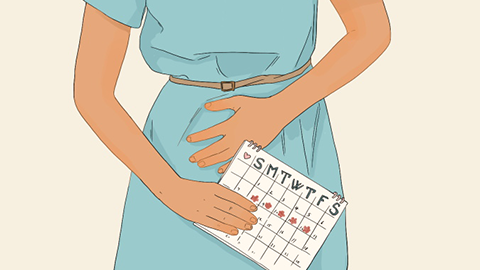
During menstruation, it is essential to keep warm. During the ovulation phase, maintaining emotional calm and avoiding excessive stress is equally important—cultivating a positive, relaxed mindset supports reproductive health. We hope this article has been helpful to you!




