


Will I get my period after becoming pregnant?
Aug 04, 2022
Source: Cainiu Health

Dr. Lv Aiming
Introduction
The first symptom of pregnancy is the cessation of menstruation, which does not occur throughout the entire pregnancy. Even after childbirth, the uterus has not fully recovered, so menstruation does not resume immediately. Therefore, menstruation does not occur during pregnancy. According to Traditional Chinese Medicine (TCM), fetal development requires nourishment from qi and blood; thus, menstruation ceases in pregnant women to redirect these vital substances toward supporting fetal growth and providing enhanced nutritional support.
Pregnancy is a joyful experience, yet some women notice light vaginal bleeding shortly after conception. This often triggers significant anxiety—wondering whether it’s normal menstruation or a sign of complications with the pregnancy. So, does menstruation occur during pregnancy?
Does menstruation occur during pregnancy?
The first sign of pregnancy is the cessation of menstruation, and no menstrual periods occur throughout the entire pregnancy. Even after childbirth, the uterus requires time to fully recover; thus, menstruation does not resume immediately. Therefore, menstruation does not occur during pregnancy. According to Traditional Chinese Medicine (TCM), fetal development relies on nourishment from qi and blood; hence, menstruation stops in pregnant women to redirect nutrients toward supporting the fetus. From a Western medical perspective, elevated estrogen secretion during pregnancy stimulates endometrial proliferation and thickening, preventing endometrial shedding—and thereby eliminating menstruation.
Vaginal bleeding during pregnancy may be implantation bleeding—a phenomenon some women experience when the fertilized egg implants into the uterine lining. If such bleeding occurs approximately six days after intercourse, it may indicate early pregnancy. The amount of bleeding is typically minimal, and its duration is brief. In early pregnancy, insufficient progesterone secretion can also cause bleeding resembling menstruation, though usually lighter in volume. Additionally, vigorous physical activity or poor maternal health in early pregnancy may trigger threatened miscarriage, presenting with symptoms such as vaginal bleeding and abdominal pain. In such cases, prompt medical evaluation is essential; treatment may include progesterone supplementation to support the pregnancy, and the mother should prioritize rest.
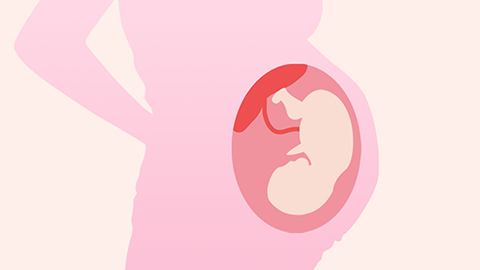
Pregnant women are advised to prioritize rest and avoid strenuous physical activity. We hope this information proves helpful.




